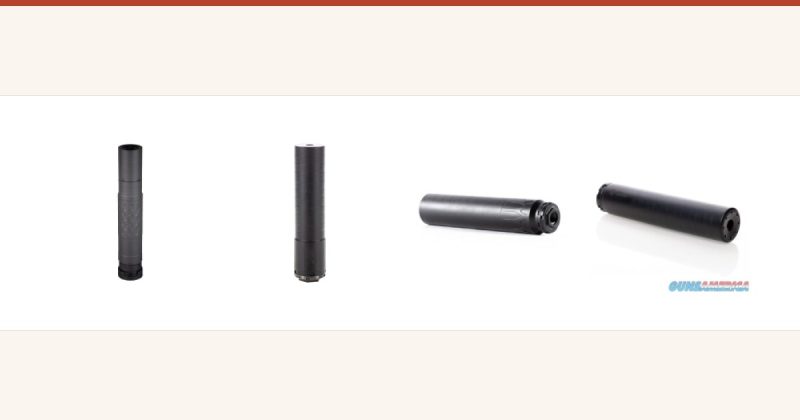
There are 38 live multi-caliber suppressor listings across the 9 retailers we track, and the first useful thing to say about them is that they are not really one category. The label sits on pistol cans, rifle cans and one can rated up to .458, and nothing about the phrase tells you which is which.
Start with the relationship between the middle figure and the average. The median multi-caliber listing is $798.15 and the average is $806.79 — a gap of under nine dollars. That is unusual, and it means something specific: this category has no premium tier pulling the arithmetic upward and no bargain basement dragging it down. The whole field sits inside a band running from an entry price of $594.15 to a high of $1,099.99, and it is evenly filled.
Compare that to how a dedicated caliber behaves. In our .45 ACP suppressor guide the average runs more than a hundred dollars above the median, because a handful of expensive specialty cans skew it. Nothing does that here. Multi-caliber is a mature, tightly-priced shelf where the difference between the cheapest defensible option and the most expensive one is about five hundred dollars, and most of the choices are clustered much closer than that.
Multi-caliber is a marketing label, not a standard
No body certifies the term. There is no test a can passes to earn it. It means the manufacturer rated the product for more than one cartridge, and manufacturers set that range wherever they like.
The catalog makes this obvious in a way a spec sheet never does. Filed under the same label right now are a .45-bore pistol can, a 9mm pistol can, a .30 caliber rifle can, a titanium hunting can and a big-bore rated up to .458. Those are not variants of one product. They are five different tools that happen to share a phrase in their listing titles, and a buyer who filters by the label alone is comparing a compact pistol can against a rifle can built for a different job entirely.
The physics underneath is simple and does not care about labels. A suppressor's bore only works downward. A tube built around a .45 bullet passes a 9mm one with clearance to spare; a 9mm tube will never pass a .45. Every multi-caliber claim is a claim about the largest thing that fits, and everything smaller is along for the ride at some cost in suppression.
That cost is the trade the category is built on, and it is worth naming. On its largest chambering a multi-caliber can behaves like a dedicated can. On everything below it, bore clearance lets gas slip past the bullet before the baffles are finished, and it is louder than a can built for that cartridge. If you own one host, that is a bad deal — buy the 5.56 can or the 9mm can and be quieter. If you own four, one Form 4 instead of two or three is the entire point.
One brand owns most of this shelf
Of the 38 listings, 18 carry a SilencerCo brand tag. That is not a tie or a lead — that is close to half the visible category from one manufacturer, and the true figure is higher, because several more SilencerCo products in the same subject are filed under a misspelled brand field or none at all.
The rest of the field is thin by comparison. Daniel Defense starts at $650.00, Rugged at $658.00, HUXWRX at $675.00 and Dead Air at $718.99. Those are real competitors with real products, but each holds two or three listings against SilencerCo's eighteen.
That concentration is worth knowing before you shop, for two reasons. Cross-brand price pressure is weak in a category one company dominates, which helps explain the flat band above — there is not much competitive daylight to open. And a mount ecosystem built around one manufacturer's standards becomes the default by weight of inventory rather than by being better.
What multi-caliber suppressors cost right now
Those rows pull from retailer feeds and refresh daily. Read them alongside where the listings actually live, because this category is concentrated on the retail side too: KYGUNCO carries 12 of the 38 and Brownells another 10, so two shops hold more than half the multi-caliber inventory we can see. Bereli has five, Ammunition Depot four, GunsAmerica three, and the rest carry one apiece.
That matters more than it would in a deep category. When two retailers hold the majority of listings, their pricing effectively sets the market, and a can that appears expensive may simply be absent from the two shops that would have discounted it. It also means shopping is quick — there are not fifteen places to check.
The best multi-caliber suppressors
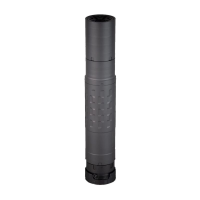
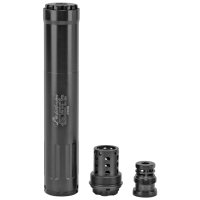
Modular, .46-caliber bore, rated for pistol and rifle hosts
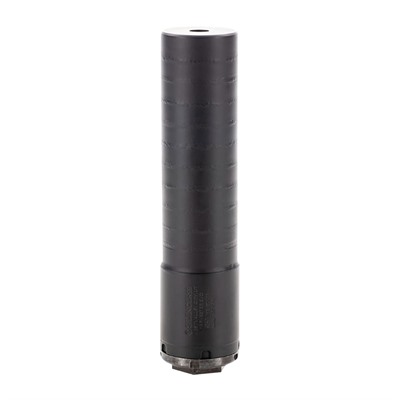
Lightweight hunting can, direct thread, anchors the bottom of the category
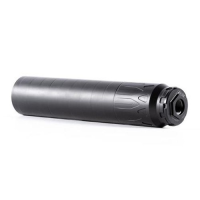
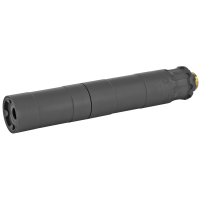
Direct-thread .30 caliber rifle can, long-running design
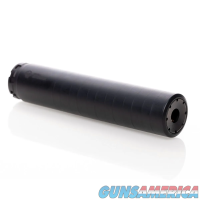
Rated up to .458 caliber, the widest bore in this category
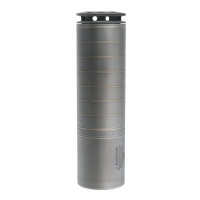
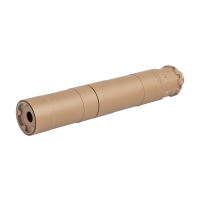
Titanium, 6.16 inches, built for carrying rather than volume shooting
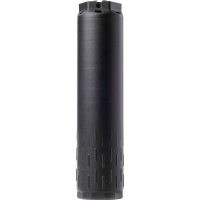
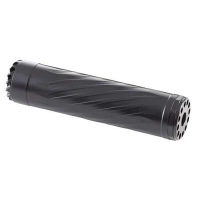
Titanium flow-through design that vents gas forward instead of back
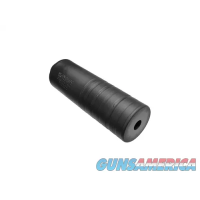
How to choose between them
Bore diameter first, and it is not close. Decide the largest cartridge the can will ever see, buy for that, and accept that everything smaller runs slightly louder. Buying a can whose bore is larger than anything you own is paying a suppression penalty on every shot for a capability you will not use.
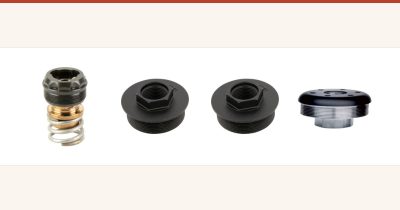
Mounting is the second decision and the one that quietly costs the most. A can that moves between hosts needs a mount system on each, and those are not free. Look for a HUB rear thread, the 1.375x24 pattern that has become a common standard, because it lets you fit mounts from different manufacturers to the same can. Without it you are committed to one company's ecosystem for the life of the suppressor, which in a category this concentrated usually means one specific company.
Back pressure is the third, and it is the one buyers discover after the purchase. A sealed suppressor raises port pressure on a gas gun, which speeds up the carrier and pushes gas back at the shooter. Flow-through designs vent it forward instead and are noticeably more pleasant on an AR, at some cost in raw suppression. On a bolt gun it barely matters; on a semi-automatic host it changes how the rifle behaves, and the same considerations we cover in the .30 caliber guide apply directly here.
Weight and length are the fourth, and they trade against each other and against suppression. More internal volume absorbs more gas; a titanium tube carries better on a hunting rifle and heats faster under strings of fire. There is no free version of this decision, only the version that matches how you actually shoot.
Then budget for the surroundings. A multi-caliber can moving between hosts sees more mounting cycles and more heat than a dedicated one, and a suppressor cover is the cheap answer to mirage off a hot tube. If subsonic shooting is anywhere in the plan, the .300 Blackout guide covers why that cartridge changes the calculation more than any bore rating does.
The paperwork, and what this page cannot settle
A suppressor is a Title II item under the National Firearms Act. Buying one means a Form 4, fingerprints, photographs and an approval wait before your dealer can hand it over, and none of that went away when the 2025 federal tax law zeroed the transfer tax on silencers. Confirm the current fee schedule with your dealer, because implementation details are still settling.
State law is the harder constraint and the one no article can answer for you. Suppressor ownership is prohibited outright in some states and restricted in others, and those rules change. Nothing here is legal advice — verify your own state's current law, and your dealer's reading of it, before you put money down.
So which one should you buy
For most buyers with a mixed safe, the SilencerCo Hybrid 46M. Its bore is wide enough to cover pistol and rifle hosts on one stamp, it comes apart into two lengths, and it sits in the middle of a price band that is narrow enough that reaching for it costs less than it would in almost any other suppressor category.
If the rifle is the only host that matters, the Dead Air Nomad-30 is the more honest purchase. It is a .30 caliber rifle can that happens to be rated across several rifle cartridges, which is what most people actually mean when they say multi-caliber.
If the gas system is your complaint rather than the sound, look at the HUXWRX Flow Range 36 Ti. A flow-through can gives up some suppression and gives back a semi-automatic rifle that does not blow gas into your face — and on a gun you shoot in volume, that is frequently the trade worth making.
And if you own exactly one host, buy the dedicated can for it. Everything on this page is a compromise sold as a feature, and it is only a good compromise when there is more than one gun on the other end of it.
Frequently asked questions
What does multi-caliber actually mean on a suppressor?
Less than the packaging implies. There is no standard behind the term and no body that certifies it. In practice it means the manufacturer has rated the can for more than one cartridge, and the range of that rating varies enormously between products — one multi-caliber can might cover 9mm and .40, another covers .223 through .308, another goes up to .458. The rating on the specific model is the only thing that matters. The phrase on the box is not a specification.
Can any multi-caliber suppressor go on any gun?
No, and this is the assumption that gets cans damaged. Bore diameter only works downward: a can bored for a .45 bullet passes a 9mm one, but a 9mm can will never pass a .45. Beyond bore, the manufacturer rates each model for specific cartridges, pressure levels, barrel lengths and rates of fire. A pistol-rated can on a short-barreled rifle is outside its rating even when the bullet fits.
Is a multi-caliber can as quiet as a dedicated one?
On its largest chambering, it is essentially a dedicated can and performs like one. On everything smaller, it gives up some suppression, because the extra bore clearance lets gas escape past the bullet before the baffles finish working. That is the trade the whole category is built on: one registered item covering several hosts, at some cost on each of them individually. Whether it is worth it depends on how many hosts you actually own.
What is a HUB thread and why does it matter?
HUB is a common 1.375x24 rear thread that many manufacturers now cut into the back of their suppressors, which lets you fit mounts from different companies to the same can. On a multi-caliber can that is worth real money, because the can is likely to move between hosts with different muzzle threads, and a HUB rear means you buy an adapter rather than a second suppressor. Check whether a can has it before you buy the mounts.
Do I need a tax stamp for a multi-caliber suppressor?
Yes. Every suppressor is a Title II item under the National Firearms Act, and being rated for several cartridges does not change that — it is still one registered item on one Form 4, with fingerprints, photographs and an approval wait. That single-stamp coverage across several hosts is precisely the appeal. The 2025 federal tax law zeroed the transfer tax on silencers, but the registration process remains. Confirm the current fee schedule with your dealer.
Should I buy one multi-caliber can or two dedicated ones?
Count your hosts honestly. If a rifle and a pistol will both wear it and you would otherwise be filing two Form 4s and waiting twice, the multi-caliber can wins on time as much as on money. If you own three ARs and nothing else, a dedicated 5.56 can will be quieter, shorter and lighter, and the flexibility you paid for goes unused. The worst outcome is buying the flexible can and never moving it.
Guns & Gear HQ earns a commission when you buy through links on this page. It costs you nothing and it is what pays for the price tracking behind these numbers. We pick products on the merits and quote whatever the retailers actually charge.

Comments