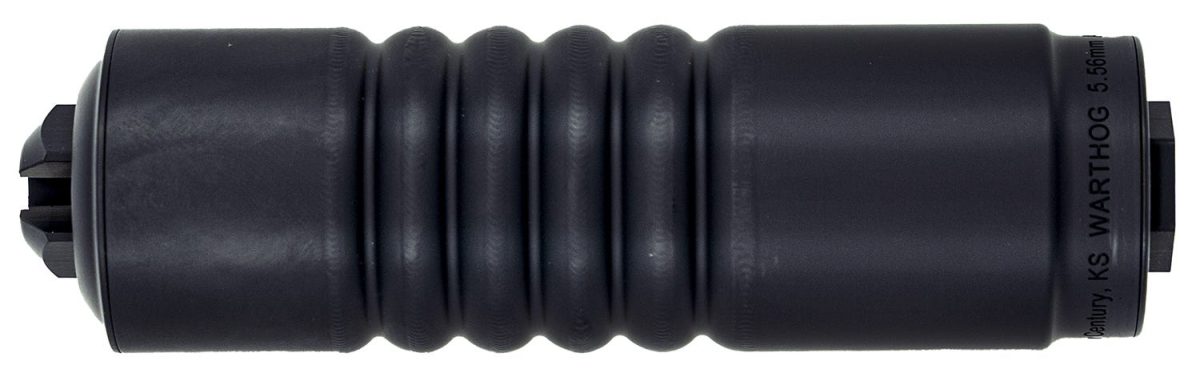
There are 80 live 5.56 suppressor listings across the 15 retailers we track today, and the distance between where the category starts and where it tops out is large enough that "what does a 5.56 can cost" is not a question with one answer. It has a shape, though, and the shape tells you more than any single price does.
Two things in that block are worth more than the headline figure. The first is that the entry price is the third-cheapest listing in the category rather than the single lowest — the cheapest row in any retailer feed is usually a dead listing or a keystroke error, and quoting it would make this page wrong the moment you clicked through.
The second is the gap between the median and the average. They are not the same number here, and the average is the higher of the two. That is not noise. A small number of premium brands list many more SKUs than the budget end of the market does, and each of those rows pulls the arithmetic mean upward without changing what a normal buyer actually faces. The median is the number to anchor on: half of everything we track sits below it.
Why 5.56 cans spread so much wider than rimfire
A .22 can is a tube, a stack of baffles and a thread pitch. The engineering problem is small and so is the price band — our guide to the best .22 LR suppressors covers a category where the whole market fits in a range that would not buy you the low end of this one.
Centerfire rifle is a harder problem in three directions at once. The can has to survive sustained fire from a gas gun, which means the blast baffle is doing work a rimfire baffle never sees, and it is why the material list runs from aluminum through stainless and Stellite up to Inconel. It has to manage back pressure, because bolting a suppressor to a direct-impingement AR speeds the carrier up and pushes gas at the shooter's face. And it has to do both while staying light enough that the rifle still handles, which is where titanium enters and where the price starts climbing fast.
Then the same category serves two buyers who want opposite things. One wants the cheapest hearing-safe can that will bolt to a 16-inch carbine and stay there. The other wants a full-auto-rated, low-back-pressure can that will move between four rifles on a quick-detach mount. Manufacturers price accordingly, and that split is most of the reason the top of what we track sits several times above the entry figure.
The 9mm market behaves differently again, mostly because boosters and pistol hosts change what the money buys — the 9mm suppressor guide walks through that spread separately.
What 5.56 suppressors cost right now
Those rows pull live from retailer feeds and refresh daily, which is the point of reading this page more than once. Suppressor pricing is not stable and it is not consistent between shops. The same model sits at meaningfully different numbers at two retailers in the same week, and the dealer who is cheapest on one brand is routinely not cheapest on the next one down the list.
One quirk worth knowing before you shop the table: the budget end of this category is dominated by a small number of brands listing the same handful of cans at many retailers, while the premium end is a wider field of manufacturers each listing fewer SKUs. That means the cheapest few rows will often be the same product from different shops. Compare the third and fourth entries, not just the first.
The best 5.56 suppressors
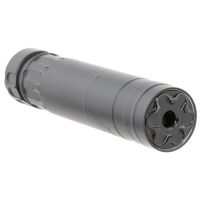
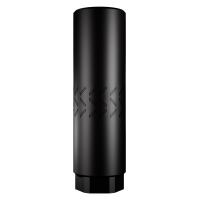
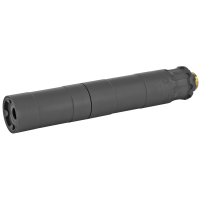
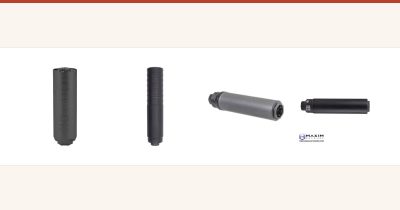
Stainless and Stellite front, full-auto rated, sits mid-market rather than at the top
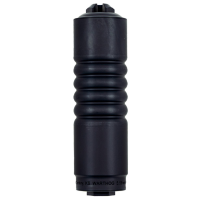
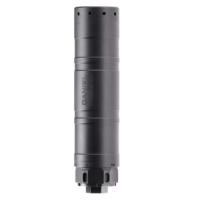
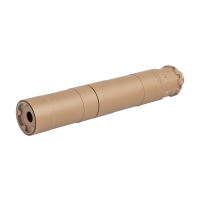
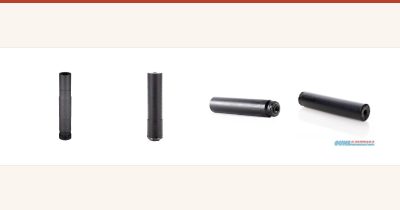
1/2-28 direct thread, anchors the bottom of the 5.56 category across several retailers
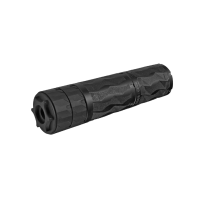
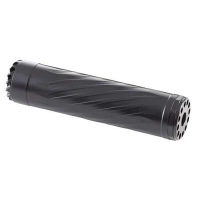
3D-printed titanium modular can built for weight-critical AR builds
Seven-inch 1/2x28 can from a rifle maker building around its own hosts
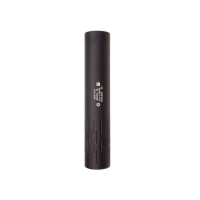
5/8-24 with a .30-caliber bore, rated across .308, 5.56 and subsonic .300 BLK
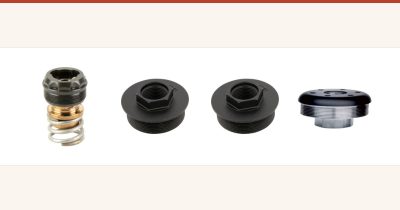
HUB-threaded body, so the mount decision stays open after you buy it
How to choose between them
Start with how many rifles the can has to serve, because that decides more than anything on the spec sheet.
If it lives on one host, buy direct thread. It is lighter, shorter, cheaper and has fewer failure points, and the entire quick-detach premium is money spent on a capability you will not use. If it has to move between rifles, the mount system stops being overhead and starts being the feature, and the 1.375x24 HUB thread that most current cans ship with means you can commit to a mount ecosystem later rather than at purchase.
Weight is the second filter and it matters in proportion to what the rifle already weighs. Hanging a stainless can off a heavy-barreled precision rifle changes very little. Hanging the same can off a stripped-down build changes how the gun points, which is why titanium sells so well to that buyer — and why our lightweight AR-15 guide treats muzzle weight as part of the build rather than an accessory bolted on afterward.
Back pressure is third, and it is the specification first-time buyers most often ignore. Every suppressor raises port pressure on a gas gun. The consequences are a faster bolt carrier, more fouling in the receiver and a face full of gas on short-gas-system carbines. Flow-through and low-back-pressure designs exist to address exactly this, they cost more, and whether they are worth it depends almost entirely on whether your host has an adjustable gas block. If it does, a conventional can plus a few clicks solves most of the problem for free.
Duty cycle is fourth. Manufacturers publish rate-of-fire and sustained-fire limits, and those limits are the difference between an aluminum-and-titanium can built for hunting weight and a stainless or Inconel one built for volume. If your idea of a range day is three hundred rounds in an hour, buy the heavier material and accept the ounces.
Caliber rating is last and it is a hard constraint rather than a preference. A dedicated 5.56 can has a bore sized for a .224 bullet. A .30-caliber projectile does not fit through it. If there is any chance the can will end up on a .300 Blackout or a .308 host, buy the multi-caliber option now, because the alternative is a baffle strike and a very expensive lesson.
Does a more expensive can actually shoot quieter?
Less than the price gap implies, and this is where the category gets oversold.
Every sound figure attached to any of these suppressors is a manufacturer number, produced with a barrel length, a load and a microphone placement that the manufacturer chose, generally following the broad shape of the military standard for impulse noise. We have not metered any of them and will not pretend otherwise. Two published figures from two companies are not directly comparable, and neither one was measured at your ear, on your host, with your ammunition.
What is dependable is that supersonic 5.56 is never going to be quiet in the way a subsonic pistol can is, because a significant part of the noise is the bullet's own sonic crack and no suppressor touches that. Barrel length moves the reading. Ammunition moves it. What the premium end of this market is actually selling is materials, duty-cycle headroom, gas management and warranty terms — real things, worth real money to the right buyer, and none of them the thing most first-time buyers think they are paying for.
The paperwork, and the part nothing here can answer
A suppressor is a Title II item under the National Firearms Act. Buying one means a Form 4, fingerprints, photographs and an approval wait before the dealer can hand it over, and none of that was repealed. What changed is the cost of the stamp: the 2025 federal tax law zeroed the transfer tax on silencers effective at the start of this year. That matters most at the bottom of the market, where a flat federal charge used to blur the difference between an entry-priced can and a mid-tier one. Confirm the current fee schedule with your dealer, because the implementation details are still settling.
State law is the harder constraint. Suppressor ownership is banned outright in some states and restricted in others, and those rules change. Nothing here is legal advice — verify your own state's current law, and your dealer's reading of it, before you put money down. If the can is destined for a short-barreled host, that is a second registration and a separate wait, which the short barrel rifle guide covers in full.
Budget for the surrounding parts too. Thread adapters if the can moves between hosts. A suppressor cover once you start shooting in volume, because a rifle can gets hot enough to scorch anything it touches and to throw enough mirage to wash out an optic.
Frequently asked questions
Do I need a tax stamp for a 5.56 suppressor?
A suppressor is a registered Title II item under the National Firearms Act regardless of caliber, so buying one still means an ATF Form 4, fingerprints, photographs and an approval wait before the dealer can release it. The 2025 federal tax law zeroed the transfer tax on silencers effective at the start of 2026, but it did not repeal the registration itself. Confirm the current fee and the current process with your dealer rather than planning around either from memory.
Will a 5.56 suppressor work on .300 Blackout?
Usually not, and this is the mistake that destroys cans. A dedicated 5.56 suppressor has a bore sized for a .224 projectile, and a .30-caliber bullet will not clear it. What you want is a multi-caliber can with a .30-caliber bore, which is why one of the picks here is a .30-bore design rated down to 5.56. Read the manufacturer's caliber list as a hard limit rather than a suggestion, and check the bore diameter instead of assuming the marketing covers your host.
How much back pressure will a can add to an AR-15?
Enough that you should plan for it. Suppressing a direct-impingement AR raises port pressure, speeds up the bolt carrier and pushes gas back through the receiver toward the shooter. On a rifle-length gun with an adjustable gas block the fix is a few clicks. On a carbine-length or pistol-length gas system it is a real annoyance, and it is the main reason flow-through and low-back-pressure designs command a premium.
Is titanium worth the money on a rifle can?
Less than it is on a pistol, but it is not nothing. Titanium buys weight off the muzzle, which matters most on a lightweight build where the can is a meaningful fraction of what you are holding up. It does not make the suppressor quieter, and titanium designs generally carry tighter duty-cycle limits than stainless or Inconel ones. If the rifle is a carbine you shoot in volume or in strings, the heavier material is the safer purchase.
Direct thread or quick detach?
Direct thread is lighter, cheaper, shorter and has one less thing to come loose. Quick detach costs weight and money and buys you the ability to move one can across several rifles in seconds, plus a muzzle device that does some of the work. If the suppressor lives on one rifle, direct thread is the better buy. If it has to serve three, the mount system pays for itself, and the reason so many current cans ship with a 1.375x24 HUB thread is precisely so you can choose later.
Why is the average price so much higher than the middle of the market?
Because a handful of premium brands list far more SKUs than the budget end does, and every one of those listings drags the arithmetic mean upward. The median is the honest number for a buyer: half the listings we track sit below it. Any time you see an average quoted for a suppressor category without a median next to it, assume it is being pulled by a small number of expensive rows.
So which one should you buy
If you want one can, one decision and no second-guessing, buy the Rugged Razor 556. It sits in the middle of the market rather than at the top of it, it is rated for the kind of shooting that kills lighter cans, and it does not ask you to buy into a mount ecosystem before you have decided you want one.
If the budget is the binding constraint, the AB Suppressor duty cans anchor the bottom of this category and do it without a design compromise you will resent later. Direct thread, 1/2-28, no accessories required to make them work.
If the rifle is a weight-conscious build, or if the can has to cover more than one caliber, that is where the extra spend produces something you notice. Titanium for the first case, a .30-caliber bore for the second. Everywhere else, the mid-market can is the better purchase and the difference is going into materials you will never work hard enough to need.
Guns & Gear HQ earns a commission when you buy through links on this page. It costs you nothing and it is what pays for the price tracking behind these numbers. We pick products on the merits and quote whatever the retailers actually charge.
Comments