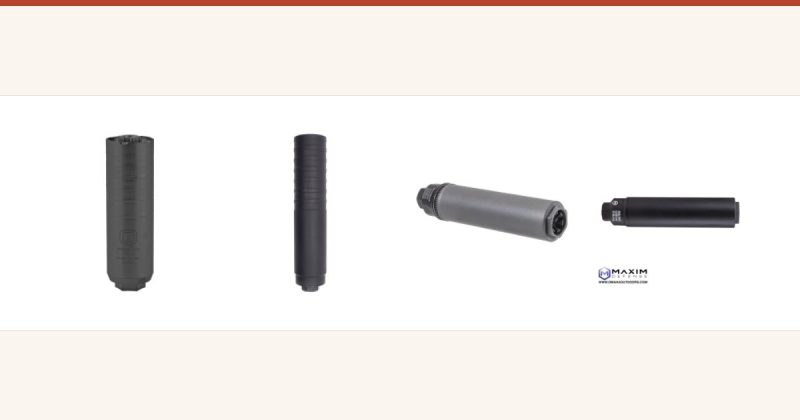
There are 7 live 6.5 Creedmoor suppressor listings across the 7 retailers we track. Not seven per shop — seven in total, one each. That number is the most useful thing on this page, because it tells you something the category pages at every other site will not: a suppressor built specifically for 6.5 Creedmoor is close to a specialty item.
Look at how close the entry price sits to the median. In a deep category the third-cheapest listing lands well below the middle of the market and describes a real budget tier. Here the two figures are about thirty-five dollars apart, which does not mean the category is cheap. It means it has no budget tier at all. Five of the seven listings cluster around a thousand dollars, and the arithmetic that would normally separate a value option from a premium one has almost nothing to work with.
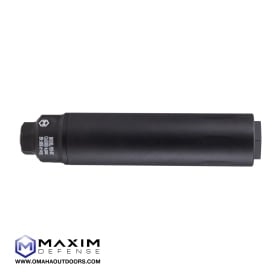
The cheapest single row in the category is a Maxim Defense PRS-D at $577.88, and we do not quote it as the entry price, because a lone low row in a seven-row category is exactly the kind of listing that turns out to be stale or mispriced when you click it. The one figure above it, an Otter Creek Labs Hydrogen K at $645.99, is the only listing in the category that is meaningfully below the cluster.
Why this category is so small
6.5 Creedmoor fires a .264-inch bullet. A .30 caliber suppressor has a bore built around a .308-inch bullet, so it passes a 6.5 projectile with clearance and no compromise in fit. Bore diameter only works downward, and that single fact is why the dedicated 6.5 market never grew: the can most 6.5 Creedmoor shooters buy is a .30 caliber can, and it also covers .308, .300 Blackout and 5.56 on the same stamp.
That is not a small competing category. It is the largest suppressor category on this site, and the price comparison is worth making directly:
Two indexes, updating live, and the shape of them is the argument. The .30 caliber market has depth, competing brands at every tier and a genuine entry point. The 6.5 Creedmoor market has five distinct products. Our .30 caliber suppressor guide covers that field in full, and for a majority of readers of this page it is the more useful article.
So what is the case for buying a caliber-specific can? A tighter bore lets less gas slip past the bullet before the baffles get to work on it, which is a real engineering advantage and the reason precision shooters pay attention. It is also a smaller advantage than the marketing suggests, and every sound figure attached to any suppressor here is a manufacturer measurement taken on a barrel, a load and a microphone placement the manufacturer chose. We have not metered any of these and will not imply otherwise.
The honest version is this: if the 6.5 Creedmoor rifle is a dedicated precision gun that will never wear the can anywhere else, the caliber-specific option is defensible. If the can is going to move between rifles, buy .30 caliber and stop thinking about it.
What 6.5 Creedmoor suppressors cost right now
Those rows pull live from retailer feeds and refresh daily. Read them with the category's size in mind, because a seven-listing market behaves differently from a deep one. One retailer selling out does not move a price here, it removes an option, and the sample is small enough that a single new product launch would visibly change every figure in the index above.
The brand picture is equally concentrated. Q anchors the middle of the category with the Jumbo Shrimp, which is listed at an identical $1,000.00 by every retailer that stocks it — a manufacturer holding a firm price rather than a market finding one. Maxim Defense sits just under it at $964.99, Otter Creek Labs is the only genuine value listing at $645.99, and Strategic Sciences occupies the top of the range alone at $1,999.00, which is roughly double the median and is a specialist over-the-barrel design rather than a general-purpose rifle can.
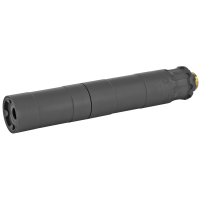
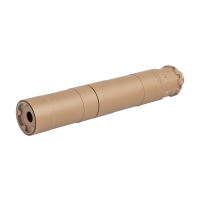
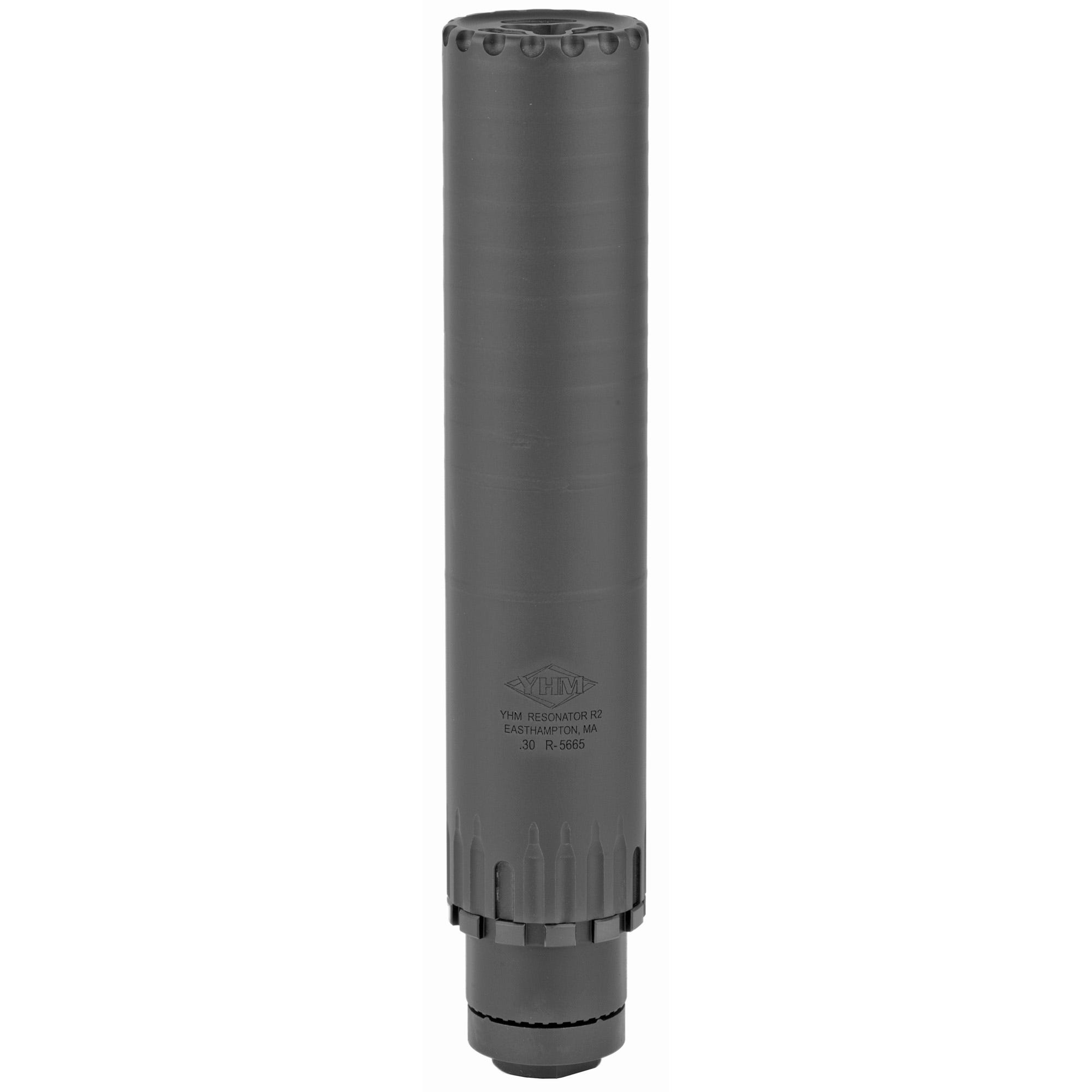
The best 6.5 Creedmoor suppressors
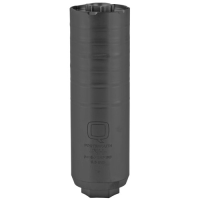
Titanium, Cherry Bomb muzzle device mount, 6.5 Creedmoor rated
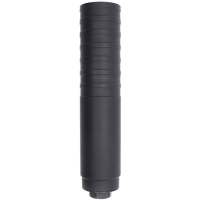
Short-configuration rifle can, black Cerakote
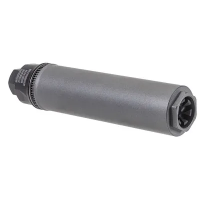
Quick-detach precision rifle can in 6.5 Creedmoor
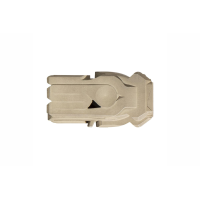
Over-the-barrel design, 5/8x24, muzzle-device mount
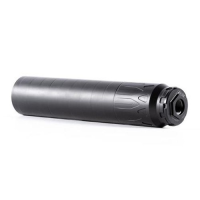
Full-size .30 caliber can that also covers 6.5 Creedmoor
The last of those is a .30 caliber can rather than a 6.5-specific one, and it is there deliberately. It is the answer for anyone whose 6.5 Creedmoor is one rifle in a safe rather than the only rifle they shoot suppressed.
How to choose between them
Start with whether the can ever comes off. A precision rifle that wears its suppressor permanently wants direct thread: less weight, less length, fewer interfaces and nothing to work loose over a long string. A can that moves between a 6.5 Creedmoor and something else wants a quick-detach mount, and the specification to care about is not the attachment time but the repeatability of the zero when it goes back on.
Weight is the second filter and it matters more on this cartridge than on most. 6.5 Creedmoor rifles are typically heavy-barreled guns shot from bipods and bags, where a few extra ounces at the muzzle cost nothing and can even settle the rifle. If yours is a lightweight hunting build instead, invert that: titanium, short, direct thread, and accept the sound penalty that comes with less internal volume.
Length is a straight trade against suppression. More volume absorbs more gas, and the short configurations in this category exist because plenty of buyers correctly decide that a rifle which still balances is worth a few decibels. Nothing in the physics changed because the can got fashionable.
The host action decides the fourth question, and it is the one buyers skip. On a bolt gun, back pressure is largely somebody else's problem, because the case is extracted by hand and the gas has nowhere to go but out the muzzle. On a gas-operated 6.5 Creedmoor, and there are more of those every year, a suppressor raises port pressure, speeds the carrier up and pushes gas back toward the shooter. The fix is an adjustable gas block and sometimes a heavier buffer. Neither is expensive next to the can, but both belong in the budget before you decide which suppressor you can afford, because a rifle that runs violently and gasses its shooter is one you stop bringing no matter how quiet it is.
Then budget for what surrounds it. A precision rifle shot in strings puts real heat into a can, and a suppressor cover is what stops the mirage off a hot tube from washing out your scope between shots. If the same stamp is going to cover a subsonic build as well, the .300 Blackout guide explains why that cartridge changes the calculation, and the 5.56 guide covers the small-bore side for anyone deciding which caliber deserves the dedicated can.
The paperwork, and what nothing here can settle
A suppressor is a Title II item under the National Firearms Act. Buying one means a Form 4, fingerprints, photographs and an approval wait before your dealer can hand it over, and none of that was repealed when the 2025 federal tax law zeroed the transfer tax on silencers. Confirm the current fee schedule with your dealer, because the implementation details are still settling.
State law is the harder constraint and the one this page cannot answer. Suppressor ownership is prohibited outright in some states and restricted in others, and those rules change. Nothing here is legal advice — verify your own state's current law, and your dealer's reading of it, before you put money down.
Frequently asked questions
Can I use a .30 caliber suppressor on 6.5 Creedmoor?
Yes, and it is what most 6.5 Creedmoor shooters actually do. The cartridge fires a .264-inch bullet, so a .30 caliber bore passes it with clearance to spare, and any modern .30 can rated for .308-class pressure handles 6.5 Creedmoor inside the manufacturer's barrel-length limits. Bore diameter only works downward, which is why the larger can covers the smaller cartridge and never the reverse.
Does a smaller bore suppressor make 6.5 Creedmoor quieter?
A tighter bore does reduce the gas that escapes past the bullet, and that is the engineering argument for a caliber-specific can. How much difference it makes at your ear depends on the design, the barrel length and the load, and any figure a manufacturer publishes was measured on their setup rather than yours. Treat it as a real but modest advantage, not a transformation.
What thread pitch does a 6.5 Creedmoor barrel use?
Most factory 6.5 Creedmoor rifle barrels are threaded 5/8x24, the standard pitch for .30 caliber rifle threading, and the dedicated cans in this category are cut to match. Custom barrels vary. Measure yours or check the manufacturer's specification before ordering a can or a mount, because a thread mismatch costs more to solve than most of the price differences in this category.
Do I need a tax stamp for a 6.5 Creedmoor suppressor?
Yes. Every suppressor is a Title II item under the National Firearms Act regardless of caliber, which means a Form 4, fingerprints, photographs and an approval wait before the dealer can transfer it. The 2025 federal tax law zeroed the transfer tax on silencers, but the registration process itself remains. Confirm the current fee schedule with your dealer.
Will a suppressor change my rifle's zero?
Almost certainly, and that is normal rather than a defect. Adding weight and a gas seal at the muzzle changes barrel harmonics, so a suppressed rifle generally has a different point of impact than the same rifle bare. The number that matters is repeatability: whether the can returns to the same zero after being removed and reinstalled. That is the specification a quality mount is actually selling you, and it is worth more on a precision rifle than a few decibels.
So which one should you buy
For most people reading this, a .30 caliber can. The 6.5 Creedmoor projectile is small enough that the larger bore costs you very little, the .30 caliber market has competition and depth that this one does not, and one registered item covering four cartridges is worth more than a marginal gain on one of them.
If the rifle genuinely earns a dedicated can — a match gun, a specific barrel, a suppressor that will not be moved — the Q Jumbo Shrimp is the reference point, and its price is consistent enough across retailers that shopping it comes down to who has stock rather than who is cheapest.
If the number is what decides it, the Otter Creek Labs Hydrogen K is the only listing in this category sitting meaningfully below the cluster, and it is a short-configuration can rather than a stripped-down one. Check the table before you order either way, because in a market this small a single listing appearing or disappearing changes the whole picture.
Guns & Gear HQ earns a commission when you buy through links on this page. It costs you nothing and it is what pays for the price tracking behind these numbers. We pick products on the merits and quote whatever the retailers actually charge.

Comments