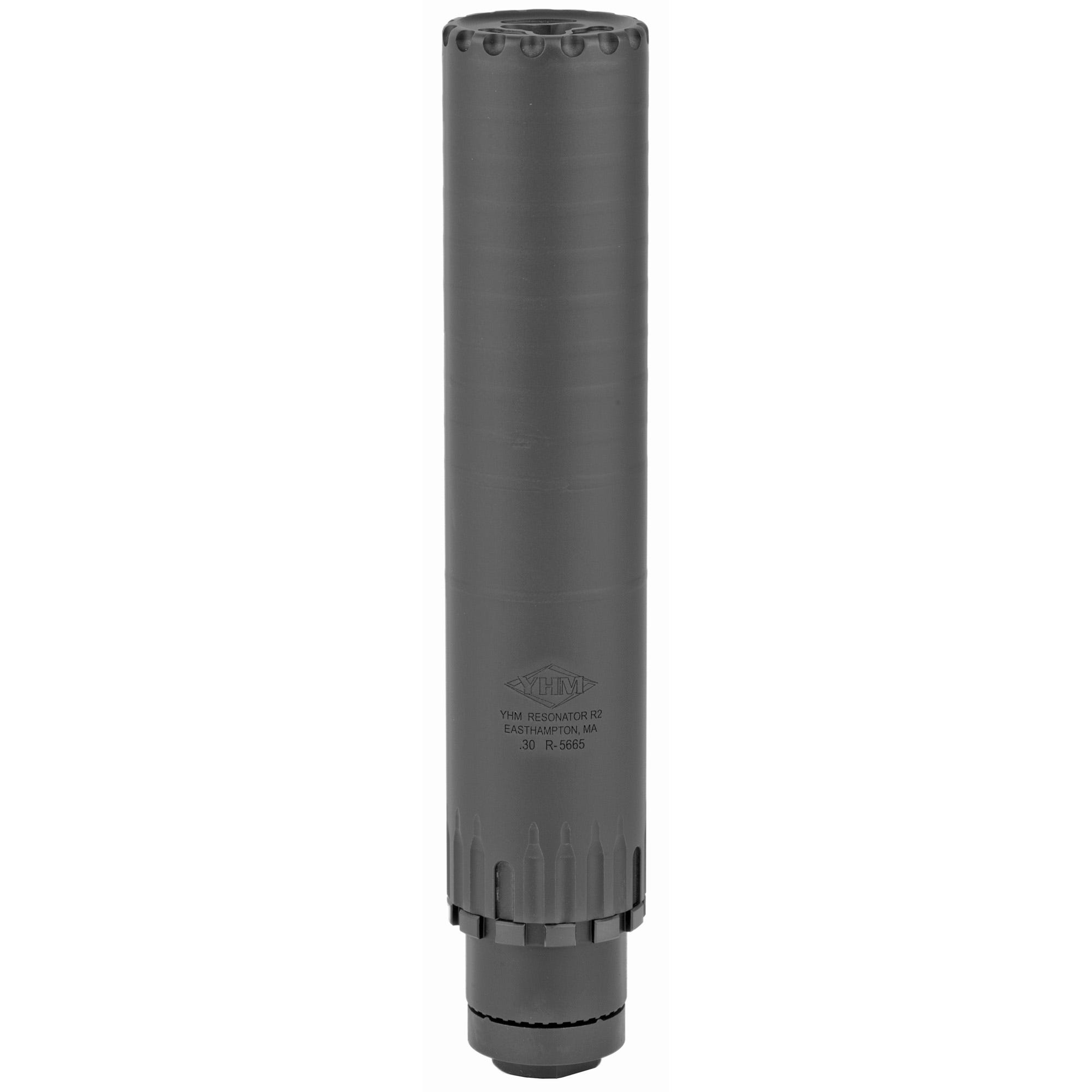
There are 102 live .30 caliber suppressor listings across the 16 retailers we track today, which makes it the largest suppressor category on the site. It is also the flattest, and that turns out to be the most useful thing about it.
The entry figure is the third-cheapest listing rather than the single lowest, because the cheapest row in any retailer feed is usually a dead listing or a keystroke error and quoting it would make this page wrong the moment you clicked through.
What is unusual here is how close the average sits to the median. In a category with a long premium tail, the arithmetic mean gets dragged well above the middle by a handful of expensive rows, and the quoted average stops describing anything a normal buyer would pay. That is not what this data looks like. The .30 caliber market is clustered, not split into a budget tier and a luxury tier, and the practical consequence is that the middle of the range is genuinely representative of what you will spend.
Why the .30 can is the one most people should buy first
Bore diameter only works downward. A .30-caliber can passes a .224 bullet with room to spare, so one registered item covers 5.56, .308, 6.5 Creedmoor, .300 Blackout and most of what sits between them, subject to the manufacturer's pressure and barrel-length ratings. A dedicated 5.56 can does none of that in reverse — its bore will not pass a .30-caliber projectile, and finding that out at the range costs you a baffle strike and the price of the can.
That is the entire argument for buying .30 first, and it is why the 5.56 suppressor guide is the second purchase for a lot of people rather than the first. It is also why the rimfire market is a separate conversation: a .22 can is cheap enough and specialised enough that nobody cross-shops it against this category, which our .22 LR guide covers on its own terms.
The trade-off is real and worth stating out loud. Running a .30-caliber bore on a 5.56 host is over-bore, gas gets past the bullet earlier than it would in a tighter tube, and the published sound figures reflect that. You are trading a few decibels on the small cartridge for one stamp instead of two.
What .30 caliber suppressors cost right now
Those rows pull live from retailer feeds and refresh daily. Suppressor pricing moves and it is not consistent between shops — the same model routinely sits at meaningfully different numbers at two dealers in the same week, and whoever is cheapest on one brand is frequently not cheapest on the next.
There is a second pattern in the brand data that changes how you should shop this category. The entry points of the best-known names — Dead Air, SilencerCo, Rugged — all sit below the category median rather than above it. Buying a marquee brand in .30 caliber does not require paying above the middle of the market, which is not true everywhere in the suppressor business. What separates the top of this range from the middle is mostly titanium, modularity and mount ecosystems, not the badge.
Retailer concentration matters too. Brownells alone accounts for roughly a quarter of the listings we track in this category, and a handful of shops carry most of the rest. A single dealer running a promotion moves this market visibly, which is another argument for checking the table rather than trusting a price you remember from last month.
The best .30 caliber suppressors
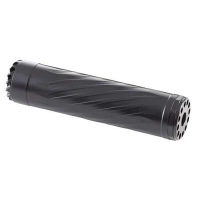
Stainless and titanium direct thread, one of the longest-running designs in the category
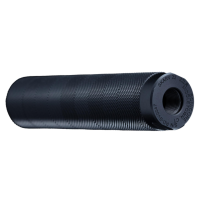
Aluminum direct thread, anchors the entry price of the whole .30 category
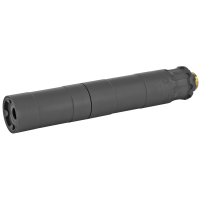
Titanium and Stellite, full-auto rated, sold in both direct-thread and quick-detach forms
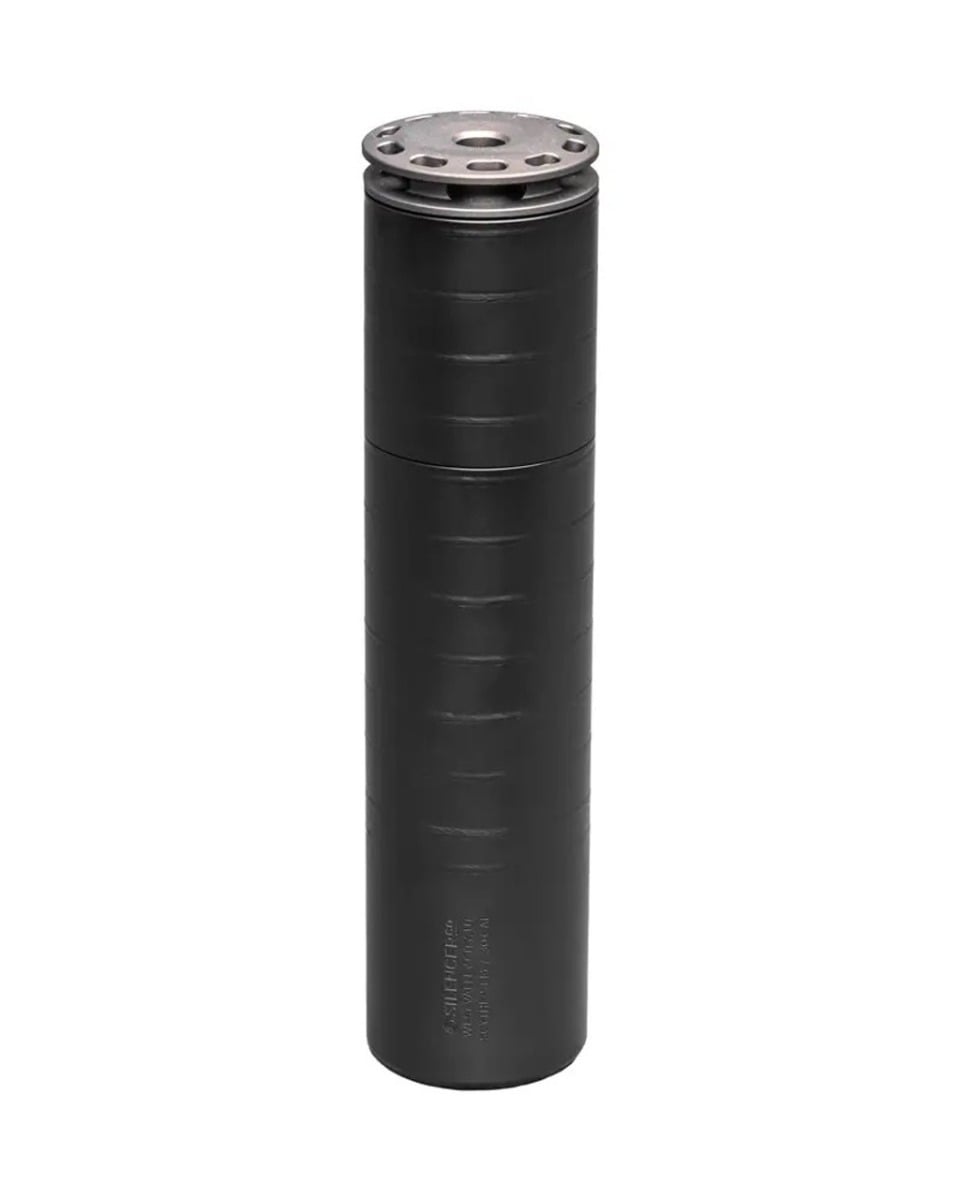
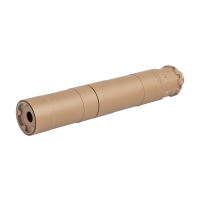
Runs short or long on the same tube, so one can changes length with the host
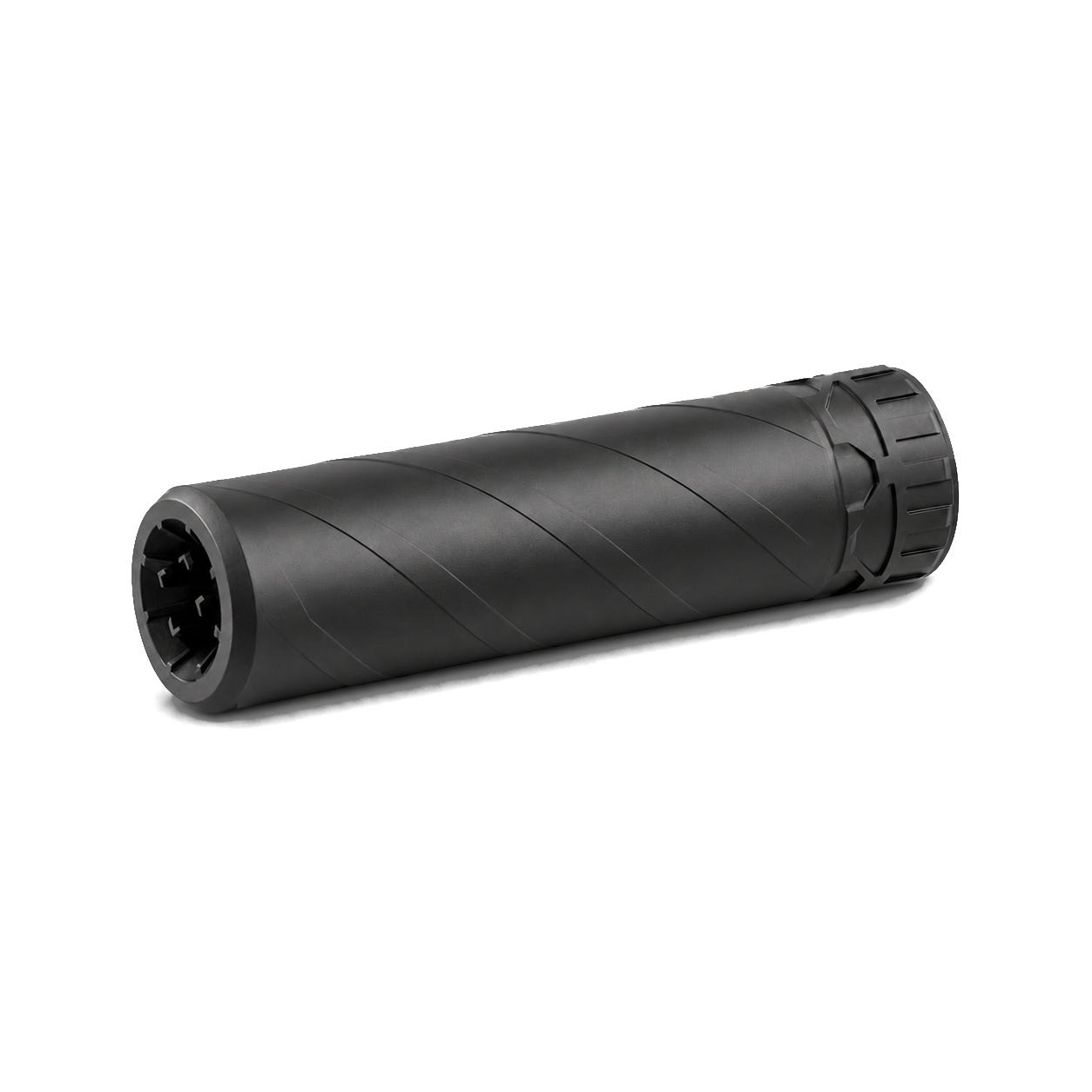
Titanium body on a 1.375x24 HUB thread, so the mount decision stays open
Short .30-caliber can for handling rather than maximum suppression
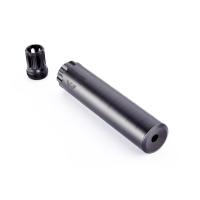
How to choose between them
Start with what the can is bolted to most of the time, because the honest answer eliminates half the field.
If it lives on a precision rifle, prioritise repeatable return to zero and accept the weight. A heavier stainless can on a heavy-barreled rifle changes almost nothing about how the gun handles, and mount repeatability is the specification that actually shows up on paper at distance. If it lives on a hunting rifle you carry, invert that entirely: titanium, short, direct thread, and no mount system to add ounces at the muzzle of something you are holding up offhand at the end of a long walk.
Length is the second filter and it is a direct trade against sound. Longer cans are quieter — that is physics, not marketing — and shorter cans handle better and shift less weight forward. The compact designs in this category exist because plenty of buyers correctly decide that a few decibels is a fair price for a rifle that still points like a rifle. Modular cans try to have both, at the cost of weight, money and a joint that has to index reliably.
Attachment is third. Direct thread is lighter, shorter, cheaper and has fewer failure points, and it is the right answer when the can lives on one rifle. Quick detach earns its weight when the can moves between hosts, and the 1.375x24 HUB thread is the hedge: it lets you commit to a mount ecosystem later instead of at checkout.
Duty cycle is fourth, and it is where the .30 category divides more sharply than the price does. A titanium hunting can and a full-auto-rated stainless can look similar on a shelf and are built for different lives. Manufacturers publish rate-of-fire and sustained-fire limits. Read them, and buy the heavier material if your range days involve strings rather than shots.
Back pressure is last and it is the one first-time buyers underestimate. Every suppressor raises port pressure on a gas gun, which speeds the carrier up and pushes gas back toward the shooter. On a bolt gun this is a non-issue. On a semi-auto it is the difference between a pleasant rifle and one you stop bringing, and the fix is usually an adjustable gas block rather than a more expensive can.
Does a more expensive can actually shoot quieter?
Less than the price spread implies, and this is where the category is most often oversold.
Every sound figure attached to any of these suppressors is a manufacturer number, produced with a barrel length, a load and a microphone placement the manufacturer chose, generally following the broad shape of the military standard for impulse noise. We have not metered any of them and will not pretend otherwise. Two published figures from two companies are not directly comparable, and neither was measured at your ear, on your host, with your ammunition.
What holds up across the category is simpler. Length and volume drive suppression more than baffle geometry does. Supersonic ammunition carries its own sonic crack that no can touches, which is why subsonic .300 Blackout sounds like a different sport through the same suppressor. And the money at the top of this range is buying titanium, modularity, mount systems and warranty terms — real things, worth real money to the right buyer, and not the thing most first-time buyers think they are paying for.
The paperwork, and the part nothing here can answer
A suppressor is a Title II item under the National Firearms Act. Buying one means a Form 4, fingerprints, photographs and an approval wait before the dealer can hand it over, and none of that was repealed. What changed is the cost of the stamp: the 2025 federal tax law zeroed the transfer tax on silencers effective at the start of this year. Confirm the current fee schedule with your dealer, because the implementation details are still settling.
State law is the harder constraint and the one nothing here can settle for you. Suppressor ownership is prohibited outright in some states and restricted in others, and those rules change. Nothing in this article is legal advice — verify your own state's current law, and your dealer's reading of it, before you put money down. If the can is going on a short-barreled host, that is a second registration and a separate wait, which the short barrel rifle guide covers in full.
Budget for what surrounds it. Thread adapters if the can moves between hosts with different pitches. A suppressor cover once you are shooting in volume, because a .30-caliber can gets hot enough to scorch a sling and to throw enough mirage to wash out a scope. And if the plan is one can across a rifle and a pistol-caliber carbine, read the 9mm guide first — the booster question makes that a genuinely different purchase rather than a cheaper version of this one.
Frequently asked questions
Will a .30 caliber suppressor work on a 5.56 rifle?
Yes, and that is the main reason to buy one. A .30-caliber bore passes a .224 bullet with room to spare, so one can covers 5.56, .308, 6.5 Creedmoor, .300 Blackout and most everything between, provided the manufacturer rates it for the pressure and the barrel length. Check the caliber and minimum-barrel-length list rather than assuming, because a can rated for .308 out of a 16-inch barrel is not automatically rated for .300 Win Mag out of a short one.
How much quieter is a dedicated 5.56 can than a .30 on the same rifle?
Somewhat, and the gap is a real trade-off rather than a rounding error. A .30-caliber bore is over-bore on a .224 projectile, which lets gas escape past the bullet earlier than a tighter bore would. Manufacturers generally publish a few decibels of difference on the same host. Whether that matters more than owning one can instead of two is a judgment call, and for most people who shoot several calibers it does not.
Do I need a tax stamp for a .30 caliber suppressor?
A suppressor is a registered Title II item under the National Firearms Act regardless of bore, so buying one still means an ATF Form 4, fingerprints, photographs and an approval wait before the dealer can release it. The 2025 federal tax law zeroed the transfer tax on silencers effective at the start of 2026, but it did not repeal the registration. Confirm the current fee and process with your dealer rather than planning around either from memory.
What thread pitch do I need?
Most .30-caliber rifle barrels are threaded 5/8x24, and most .30-caliber cans ship for that pitch. AR-15 barrels are usually 1/2x28, so putting a .30 can on one means either a thread adapter or a mount system that handles both. Several cans in this category ship with interchangeable adapters for exactly this reason. Confirm the pitch on every host before you buy, because the adapter is cheap and the wrong assumption is not.
Is a HUB thread worth paying for?
It is worth it if you have not decided how you want to attach the can. A 1.375x24 HUB body accepts direct-thread mounts, quick-detach mounts and adapters from several manufacturers, so the attachment decision stays reversible after purchase. If you already know the can lives direct-thread on one rifle forever, HUB compatibility is a feature you will pay for and never exercise.
Why is the .30 caliber market's average price so close to its median?
Because the category does not have the long premium tail that some suppressor categories do. When the mean and the median sit close together, the listings are clustered rather than split into a cheap tier and an expensive tier, which means the price you see quoted is broadly representative of what you would actually pay. It also means shopping the extreme ends of the range buys you less differentiation here than it would elsewhere.
So which one should you buy
If you want one can, one decision and no second-guessing, the Dead Air Nomad-30 is the safe answer. It has been in production long enough that its failure modes are known rather than theoretical, it sits comfortably inside the middle of this market, and it does not ask you to buy into a mount ecosystem before you have decided you want one.
If the budget sets the terms, the Gemtech Tracker 30 anchors the entry price of the entire category and does it as a straightforward direct-thread aluminum can rather than a compromise you will resent. It gives up weight tolerance and duty cycle to get there, which is the honest trade at that end of the market.
If the rifle is a hunting gun you carry, or if the can has to move between hosts, that is where the extra spend produces something you notice — titanium for the first, a HUB thread and a mount system for the second. Everywhere else in this category, the middle of the range is the better buy, and the difference above it is going into capability most owners never work hard enough to need.
Guns & Gear HQ earns a commission when you buy through links on this page. It costs you nothing and it is what pays for the price tracking behind these numbers. We pick products on the merits and quote whatever the retailers actually charge.


Comments