
Buying a suppressor is a paperwork problem before it is a shopping problem. The can you choose matters less to how the process goes than the decisions you make before you choose it, and most of the frustration people report comes from not knowing the sequence in advance. This is the sequence.
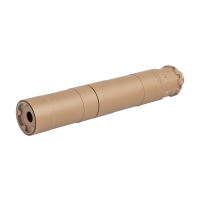
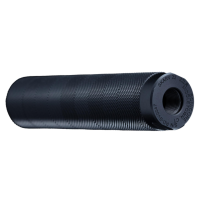
That block is the rimfire corner of the market, which is where a large share of first purchases land. A .22 can is the cheapest way into the system and the one most likely to get shot enough to justify the wait. It is not the only sensible first purchase, but it sets a useful floor for what the hardware side of this costs.
What you are actually buying
A suppressor is a Title II item under the National Firearms Act. That places it in the same regulatory family as short-barreled rifles and machine guns, which sounds more dramatic than it is in practice: you are not applying for a licence, and you are not being granted a privilege that can be revoked at renewal. There is no renewal.
What you are doing is registering a specific serial-numbered object to a specific person or entity. For most of the National Firearms Act's history that registration also carried a flat federal transfer tax, and that tax was the reason a cheap rimfire can never really counted as cheap. The 2025 federal tax law zeroed the transfer tax on silencers effective at the start of this year. The registration survived the change completely intact — confirm the current fee schedule with your dealer, because the implementation details are still settling.
Two consequences of registration follow, and both surprise first-time buyers. The suppressor is registered to you, not to a gun, so it moves freely between hosts you own. And the registration does not travel with a sale — selling it later means another Form 4 filed by the buyer.
Individual, trust, or corporation?
You can file as yourself or through a legal entity, usually an NFA trust.
Filing as an individual is simpler and free. You are the only person who can legally possess the suppressor, which means it cannot sit in a shared safe that a spouse also opens, and it becomes part of your estate when you die.
A trust adds a document and usually a lawyer's fee, and in exchange more than one person can be named as a trustee with lawful possession. It also gives the can somewhere to go on your death without an estate transfer. The historical argument for trusts — that they skipped fingerprinting and the chief law enforcement officer sign-off — no longer applies, since every responsible person on a trust now submits prints and photographs too.
For one person buying one can, individual filing is usually the right answer. For a household where more than one adult shoots, a trust earns its fee.
The Form 4 process, step by step
The order matters, and it is not the order most people expect.
First, confirm your state permits civilian possession. This is the step that ends the process for some readers, and it should happen before any money moves.
Second, choose and pay for the can. The suppressor is bought before it is approved. Your dealer takes payment, logs the serial number into their bound book, and the can sits on their shelf for the duration.
Third, file the Form 4. This is the transfer application from the dealer to you. It carries fingerprint cards, a passport-style photograph, and a background check. Most dealers now submit electronically rather than on paper, and most will walk you through the fingerprint and photo requirements in the shop.
Fourth, notify your chief law enforcement officer. This is a notification rather than a request for permission — the sign-off requirement was removed years ago, and a local official cannot veto your transfer by declining to respond.
Fifth, wait. Then collect the can from the dealer once the approval comes back, at which point you take possession for the first time.
How long does approval take?
We are not going to print a number here, and you should be sceptical of articles that do.
Approval times for Form 4 transfers have moved enormously over the past decade — from many months to dramatically less after electronic filing was introduced, with variation depending on filing method and whether you applied as an individual or a trust. Any figure written into an article is a snapshot of the month it was published, and this is one of the few genuinely important numbers in the process that we have no live data source for. The people who actually know are the ones filing daily.
Ask the dealer handling your transfer what they are currently seeing on recent approvals. That answer will be better than anything published, including ours.
What a first suppressor actually costs
The table above is the entry end of the whole suppressor market across the retailers we track, cheapest first, one row per brand. It is worth reading before you settle on a budget, because the spread in this category is wider than most buyers assume — the same shelf holds rimfire cans and precision magnum cans, and the gap between them is several multiples rather than a few percent.
One thing to keep in mind when you read it. The entry price we quote is the third-cheapest listing rather than the single lowest, because in a catalog this size the outright cheapest record for any given can is very often a discontinued configuration or a price that will not survive checkout.
The removal of the federal transfer tax changed the arithmetic at the bottom of this table more than at the top. A flat federal charge is trivial against a precision magnum can and substantial against an entry-level rimfire one, so the cheapest end of the market is where that change is actually felt.
Which can should be your first purchase?
The honest answer depends on what you already own and shoot most.
If the answer is a .22 pistol or rifle, start there. Rimfire cans are the least expensive entry, they are dramatically effective on subsonic ammunition, and they get used. Our .22 LR suppressor guide covers the trade-off that defines them, which is that rimfire fouls badly and the designs worth owning come apart for cleaning.
If you shoot a centerfire rifle more than anything else, a .30 caliber can is the highest-leverage single purchase available, because its bore passes everything below it. The .30 caliber guide makes that case in detail. That logic has limits, though — it stops at the bore diameter, which is why .338 Lapua needs its own can rather than borrowing the .30 you already own.
If the gun you actually carry and shoot is a pistol, a 9mm suppressor is more useful than a rifle can you will mount twice a year. And if you would rather buy once for a mixed safe, our guide to multi-caliber suppressors explains what that label does and does not promise.
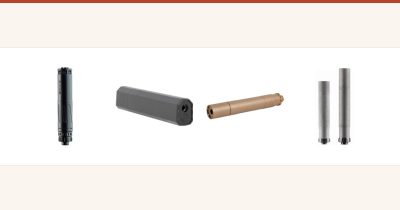
Good first cans

Modular stainless and titanium that reconfigures between two lengths
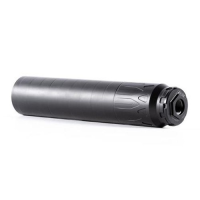
Compact .30 caliber can that also covers the cartridges below it

Modular pistol can listed for .45 ACP and the calibers below it

Eccentric body that sits below the bore line to clear standard pistol sights

Titanium .30 caliber can sold with a multi-caliber rating

Modular 9mm can built for both pistol and carbine hosts
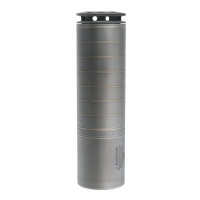
Titanium multi-caliber can listed at 6.16 inches for a .30 caliber bore
What else you have to budget for
The can is the obvious cost. Three others catch people out.
Threading. If the host barrel is not already threaded, a gunsmith has to do it, and on some guns that is not a trivial job. Factory threaded barrels are common now but far from universal.
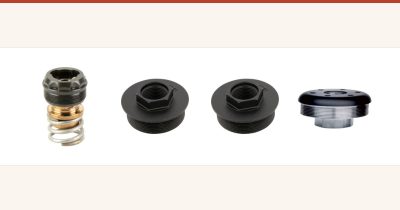
Mounts. Many cans ship direct-thread and mount straight onto the barrel. Quick-detach systems need a muzzle device per host, so a single can shared across three rifles means three devices. That is a real cost and it is easy to overlook when comparing two cans on price alone.
Heat management. A can that gets run hard becomes genuinely dangerous to touch and radiates onto whatever is near it, which is why a suppressor cover is closer to a necessity than an accessory on a rifle that sees strings of fire rather than single shots.
Where your state overrides all of this
Everything above describes federal law, and federal law is the permissive layer here. The restrictive layer is your state.
Suppressors are lawful for civilians in most of the country, but a minority of states prohibit private possession outright, and among the states that allow ownership, some restrict or prohibit suppressor use while hunting. Those two questions have different answers in the same state more often than you would expect, so confirm both.
State law in this area also changes, in both directions, and it changes faster than articles get updated. Nothing here is legal advice, no specific state's rules are stated as settled fact, and the only reliable answer is your current state statute and a dealer who transfers these routinely where you live. Verify before you commit, not after.
Frequently asked questions
Do I need a special license to own a suppressor?
No. There is no license. A suppressor is a Title II item transferred to an ordinary buyer on an ATF Form 4, with fingerprints, photographs and a background check. What you need is a dealer in a state that permits the transfer, and patience. The 2025 federal tax law zeroed the transfer tax on silencers effective at the start of this year, though the registration itself was left intact.
Should I buy through a trust or as an individual?
Both are routine. A trust lets more than one person legally possess the can and simplifies what happens to it when you die; an individual filing is simpler to set up and costs nothing extra. Since responsible persons on a trust submit fingerprints and photographs as well, the paperwork advantage that trusts once had is largely gone.
Can I take my suppressor across state lines?
A suppressor does not require advance notice to travel between states the way a short-barreled rifle does under federal law. The controlling problem is that some states prohibit possession entirely, and driving into one with a can in the car is a serious offence regardless of your home state's rules. Check every state on the route.
What happens to the suppressor while I wait?
It stays with the dealer. You pay for the can up front, the Form 4 goes to ATF, and the dealer holds the suppressor in their bound book until approval comes back. You do not take possession of anything until the transfer is approved.
Does a suppressor need cleaning?
It depends on what you shoot through it. Centerfire rifle cans are generally sealed units that are not user-serviceable and stay reasonably clean because the heat burns residue off. Rimfire cans foul quickly with lead and unburnt powder, which is why most rimfire designs are built to come apart for cleaning.
Can one suppressor work on more than one gun?
Yes, within its bore and pressure rating. A can rated for a larger bullet will pass a smaller one, which is why a .30 caliber or multi-caliber can covers so much of a typical safe. The limits are that a can bored for a smaller cartridge will never pass a larger bullet, and every host needs the right thread pitch or mount.
Guns & Gear HQ earns a commission when you buy through links on this page. It costs you nothing and it is what pays for the price tracking behind these numbers. We pick products on the merits and quote whatever the retailers actually charge.

Comments