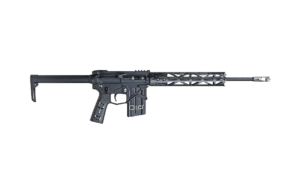
A lightweight AR-15 trades a little mass for a lot of handling. Carry one on a hunt, run it through a carbine class, or clear the house with it, and the weight you shaved off the barrel and rail shows up as less fatigue and faster transitions. The trade is real, too: less mass means a touch more felt recoil and muzzle rise, and the skinniest barrels heat up faster under sustained fire. For most shooters who are not dumping mag after mag, that trade is worth making. Here are five rifles that get the weight down without giving up what matters.
What Is the AR-15?
The "AR" in AR-15 stands for ArmaLite, the company that designed the rifle in the 1950s, not "assault rifle" as the name is often misread. What made the platform endure is modularity: barrels, handguards, stocks, grips, and optics all swap with hand tools, so one lower can become a dozen different rifles. AR-15s are semi-automatic, firing one round per trigger pull, and most are chambered in 5.56x45mm NATO or .223 Remington. That mix of customization and a light, handy package is exactly what makes a lightweight build so appealing.
5 Best Lightweight AR-15 Rifles
These five span the range from a no-expense-spared PDW to a hard-use carbine, but every one is built to carry light.
Q Honey Badger
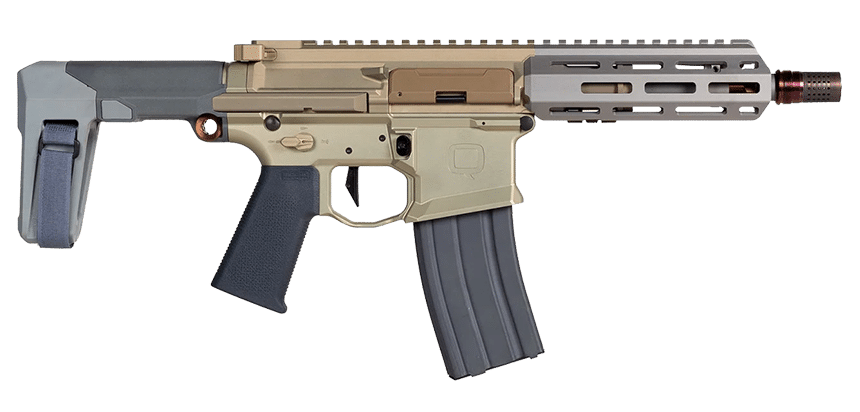
The Q Honey Badger is the featherweight of the group, around four and a half pounds in its short-barreled form. It is chambered in .300 Blackout and built from the ground up to run suppressed, which is the whole point of the gun, and it has the cult following and the price tag to match. Worth knowing before you fall for it: in rifle form it is a short-barreled rifle, an NFA item that requires a tax stamp and the wait that comes with it.
Daniel Defense DDM4V7 SLW

Daniel Defense's DDM4V7 SLW is the "super lightweight" version of the company's flagship carbine, and it comes in under six pounds. The weight comes off in the right places: a 14.5-inch cold-hammer-forged lightweight-profile barrel and a slim 6061-T6 aluminum M-LOK rail, not gimmicks. You get Daniel Defense reliability and fit in a rifle that carries far lighter than its price suggests.
LWRCI DI Standard Rifle

LWRC is best known for piston guns, but the IC-DI is its take on a straightforward direct-impingement rifle, landing around six and a half pounds unloaded. You get the company's build quality, tight tolerances, and finish in a lighter, simpler, less expensive package than its piston line. A solid pick if you want a name-brand rifle that is easy to carry and easy to maintain.
Wilson Combat Tactical Lightweight
If money is no object, the Wilson Combat Tactical Lightweight is the high-end entry. Wilson pairs a lightweight-profile match barrel with the hand-fit quality the company is known for, landing near six pounds. It is the rifle for the shooter who wants featherweight handling and bench-grade accuracy and is willing to pay for both.
Battle Arms Development OIP

Battle Arms Development built its name on ultralight billet components, and its rifles reflect it. The OIP builds lean on the company's skeletonized receivers and lightweight furniture to cut ounces wherever possible, putting them among the lightest complete guns on this list. If chasing the lowest possible weight is the goal, BAD is where to look.
Pros and Cons of a Lightweight AR-15
The upside is handling. Less weight means a rifle that is quicker to mount, easier to swing between targets, and far less tiring to carry over a long day in the field or a full day on the range. For hunting, patrol, or any role where the gun spends more time being carried than fired, that matters more than a few ounces of bench stability.
The downside is physics. Less mass to soak up recoil means slightly more felt kick and muzzle rise, which newer shooters notice as harder follow-up shots. Thin, lightweight-profile barrels also heat up faster and are less suited to long strings of rapid fire than a heavy barrel. Neither is a dealbreaker for normal use, but both are worth knowing before you buy.
How to Choose the Right AR-15 for You
Start with how you will use it. A rifle you carry hunting or in a class benefits most from shedding weight; a range gun you shoot in long strings may be happier with a heavier barrel. From there, weigh build quality and materials, because a good lightweight rifle gets light through barrel profile and rail design, not by cutting corners on the receiver or bolt. Then sort out ergonomics and accuracy, the stock, grip, trigger, and barrel that fit your shooting, and set a budget. The five rifles above run from attainable to aspirational, so there is a lightweight AR here for most shooters.
Conclusion
A lightweight AR-15 is one of the most practical choices you can make if you actually carry your rifle. The five here cover the spectrum: the Q Honey Badger for a suppressed featherweight, the Daniel Defense DDM4V7 SLW and LWRCI DI for hard-use carbines that still carry light, the Wilson Combat for no-compromise quality, and Battle Arms Development for the lowest weight on the list. Match the rifle to how you shoot, keep the recoil and barrel-heat trade-offs in mind, and you will end up with a gun that is a pleasure to carry and still does the work.

Comments