The catalog holds 47 live .45 ACP suppressor listings across 17 retailers today, and the shape of those 47 rows tells you more about this category than any spec sheet will. The entry price sits well below the median, which means .45 ACP still has a genuine budget tier — something the rifle categories on this site mostly lost.
Read the gap between the middle figure and the average. The median .45 ACP listing is $727.00 and the average is $831.52, and when the average runs more than a hundred dollars above the median it means a thin premium tier is dragging the arithmetic upward while most of the market sits lower. That is the useful read: the middle of this category is cheaper than the average price suggests, and shopping the middle is not a compromise here.
The entry price we quote, $569.00, is the third-cheapest of the 47 listings rather than the cheapest. There is a SilencerCo Octane 45 2.0 sitting below it at $526.15, and we do not lead with that figure, because the single lowest row in any category is the one most likely to be a clearance unit, a stale feed or a pricing error. Two listings deep is where a market price becomes real.
Why the .45 bore is the most flexible one in pistol suppression
A suppressor's bore only works downward. A tube built around a .451-inch bullet passes a .355-inch one with room to spare, which is why a .45 ACP can is the closest thing pistol shooters have to a universal stamp — 9mm, .40, .380 and .45 through one registered item, provided the manufacturer rates it that way and you have the right piston.
The cost of that flexibility is real and worth stating plainly. All that extra bore clearance lets propellant gas slip past the bullet before the baffles have finished with it, so a .45 can is louder on 9mm than a can built for 9mm. Here is what the dedicated side of that decision costs:
Two live indexes, and the comparison is the whole argument. If 9mm is genuinely what you shoot, buy a 9mm can — our 9mm suppressor guide covers that field, and the sound difference on a dedicated bore is not marketing. If you own a .45 and a 9mm and want one stamp rather than two, the .45 can is the correct answer and the noise penalty is the price of admission.
There is a second reason .45 has its quiet reputation, and it belongs to the cartridge rather than the can. Standard .45 ACP is subsonic as loaded, so a suppressed .45 has no sonic crack to fight. Standard 9mm is supersonic and cracks downrange regardless of what is screwed to the muzzle. That is a property of the ammunition, and it is the same reason a .300 Blackout can sounds so different on subsonic loads than on supersonic ones.
What .45 ACP suppressors cost right now
Those rows pull from retailer feeds and refresh daily, and the brand picture behind them is unusually competitive. Rugged starts at $599.00, Yankee Hill Machine at $569.00, Gemtech at $687.99 and B&T at $619.99 across six listings. Above that cluster the market thins fast: Banish starts at $979.00 and Sig Sauer at $999.99, and there is very little between the two groups.
Where those listings live matters as much as what they say. The 47 rows are not spread evenly across the 17 retailers we track. GrabAGun carries nine of them, Shooting Surplus six, and BattleHawk Armory and Brownells five each, which means four shops account for more than half the visible .45 ACP market and the rest of the field carries two to four listings apiece. In practice, a comparison built on one retailer's inventory is a comparison of roughly a fifth of the category. It is also why a can that looks discontinued at your usual shop is frequently sitting in stock somewhere else, occasionally with a shorter transfer queue behind it.
The most instructive number on this page is not in the index at all. The Rugged Obsidian 45 — the same product, same configuration — is listed at $599.00 by one retailer we track and $727.00 by another. That is a spread of well over a hundred dollars on an identical registered item, and it exists because suppressor pricing is set shop by shop rather than by the manufacturer. On something you will wait months to take home, checking three retailers is worth more than any amount of comparing baffle counts.
The best .45 ACP suppressors
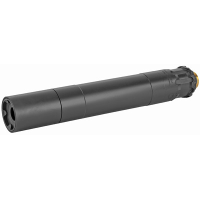
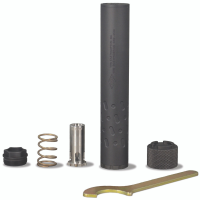
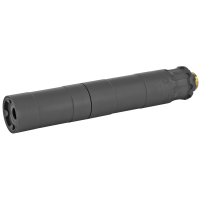
User-configurable length, rated down to 9mm and .40, direct thread or piston
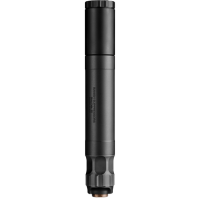
Pistol can in .578-28, sits at the bottom of the category
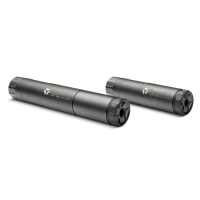
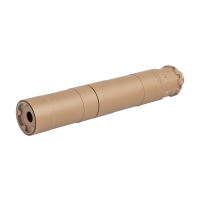
Two-length titanium modular can, .578-28
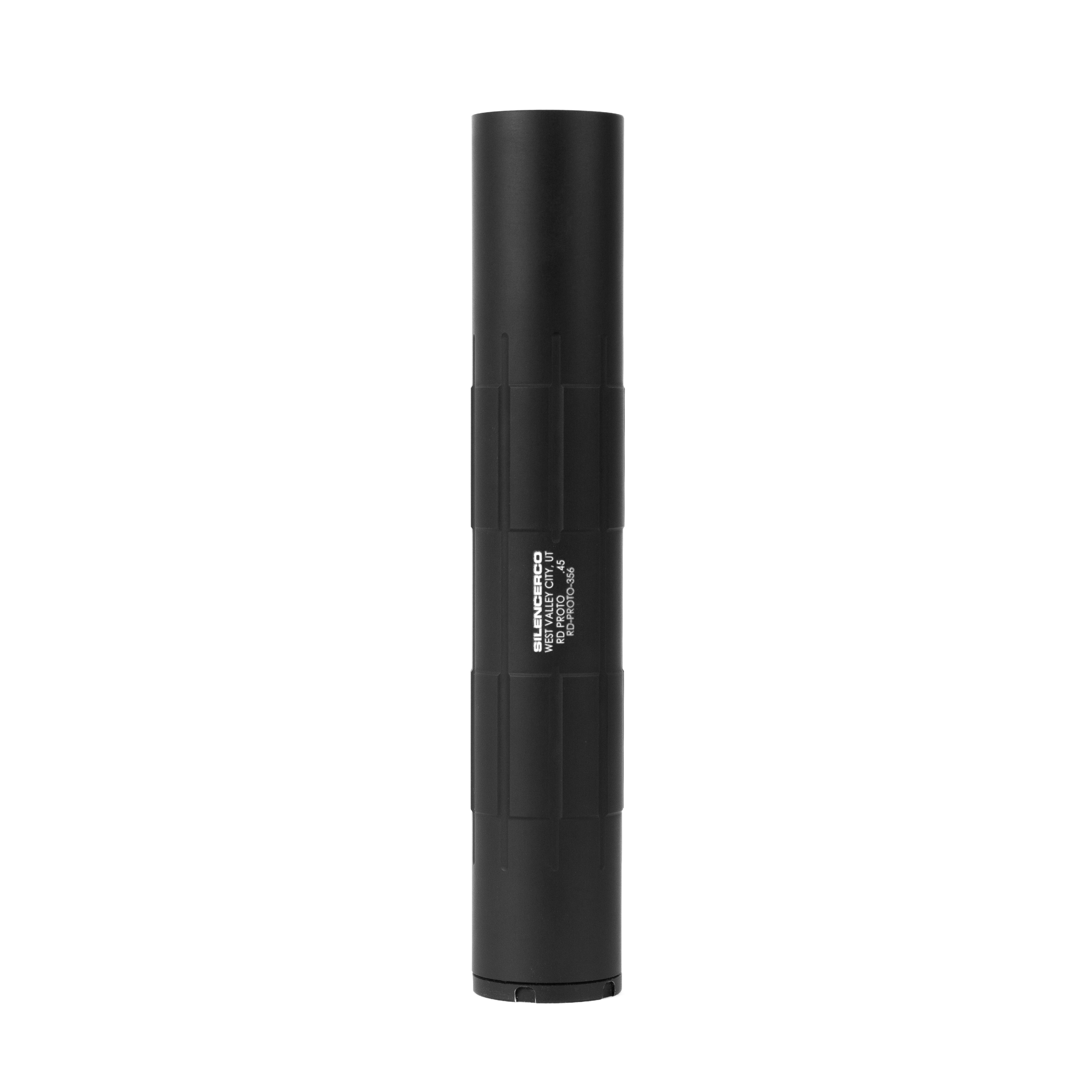
Full-size aluminum tube, piston mount, long-running design
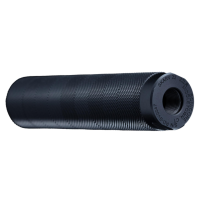
Aluminum direct-thread pistol can with a removable end cap
Titanium modular can, .578-28, European-built
How to choose between them
Start with the host, because it decides more than the can does. A tilting-barrel pistol — a 1911, a Glock 21, most modern .45 autos — needs the barrel to unlock and travel to cycle, and a suppressor hanging off the muzzle adds enough mass to stop that happening. The fix is a Nielsen device, the spring-loaded piston in the back of the can that lets the barrel move independently. A fixed-barrel host or a carbine takes a direct-thread mount instead and does not need one. Buy the wrong mount and the gun short-strokes.
Materials are the second filter, and in this category they mostly buy weight rather than durability. Aluminum tubes are entirely adequate for a pistol can shot at pistol volume, which is why several of the best options here are aluminum and priced accordingly. Titanium and stainless cost more and earn it on hosts that run hot or on cans expected to see carbine duty. If the can lives on a range pistol, the aluminum option is not the compromise version.
Modularity is the third, and it is the one worth paying for if the can will move. A modular can splits into a short and a long configuration, so the same registered item is a compact package on a carry-length host and a full-size quiet one on a range gun. The trade is more threaded interfaces, a little more weight and one more thing to check for tightness before a string of fire.
Length is a straight trade against suppression, exactly as it is on a rifle can: more internal volume absorbs more gas, and a shorter configuration gives some of that back for a package that still points well. Nothing in the physics changed because short cans got popular.
Then there is the carbine question, which is where .45 ACP quietly gets interesting. A pistol-caliber carbine in .45 is a fixed-barrel host, so it needs no booster, and the same can that required a piston on your 1911 usually accepts a direct-thread mount instead. What changes is duty cycle. A carbine invites strings of fire a pistol never sees, the tube gets hot faster than most buyers expect, and a can rated only for semi-automatic pistol use is not automatically rated for sustained carbine fire. Check the manufacturer's rating for barrel length and rate of fire before you assume one registered item covers both hosts, because that rating is the specification that actually varies between the cans on this page.
Budget for what goes around it, too. A .45 pistol can shot in volume gets hot enough to throw mirage, and a suppressor cover is the cheap fix. If a rimfire host is anywhere in your plans, note that most .45 cans are not user-serviceable in the way a dedicated rimfire can is, and lead fouling is the reason — the .22 LR guide explains why that category is built differently.
The paperwork, and what this page cannot settle
A suppressor is a Title II item under the National Firearms Act. Buying one means a Form 4, fingerprints, photographs and an approval wait before your dealer can hand it over, and none of that went away when the 2025 federal tax law zeroed the transfer tax on silencers. Confirm the current fee schedule with your dealer, because implementation details are still settling.
State law is the harder constraint and the one no article can answer for you. Suppressor ownership is prohibited outright in some states and restricted in others, and those rules change. Nothing here is legal advice — verify your own state's current law, and your dealer's reading of it, before you put money down.
So which one should you buy
For most buyers, the Rugged Obsidian 45. It sits near the middle of a category whose middle is genuinely competitive, it reconfigures between lengths, and it is rated down through 9mm and .40, which is the whole reason to buy a .45 can in the first place. Shop it across at least three retailers before you commit, given the spread we found on identical listings.
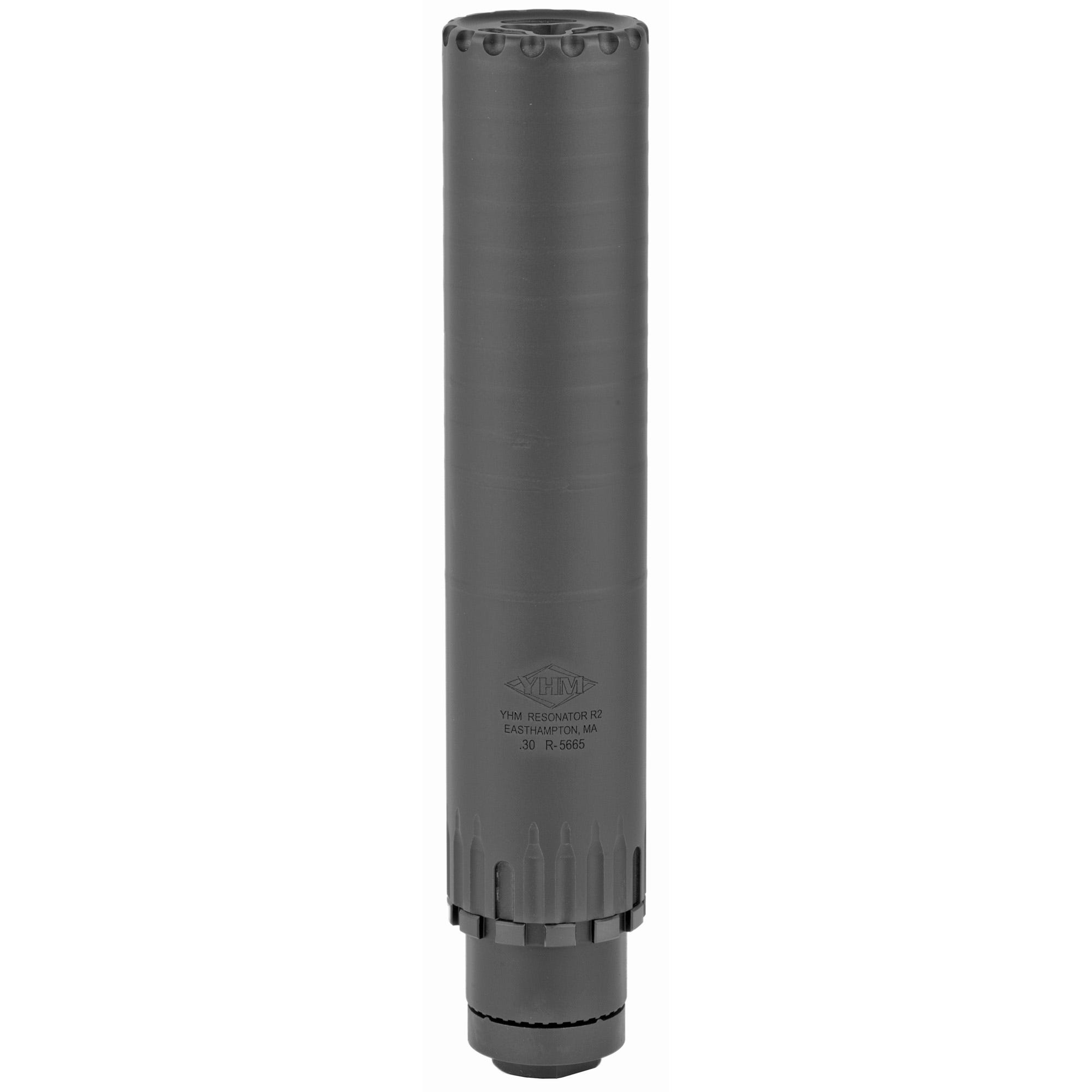
If the number is what decides it, the Yankee Hill Machine Sidewinder M2 is what the entry price of this category actually buys, and it is a complete pistol can rather than a stripped-down one.
If the can is going to cover everything you own, the Banish 45 is rated from rimfire up through .45 ACP and costs what that range implies. One stamp, one wait, most of the safe — and a sound signature on each individual caliber that a dedicated can would beat.
Frequently asked questions
Can a .45 ACP suppressor shoot 9mm?
Most of them can, and it is the main reason people buy one. A .45 can is bored for a .451-inch bullet, so a 9mm projectile passes through with clearance. What you need to confirm is the manufacturer's own rating, because the bore is only half the question — the piston or booster has to match your host's thread pitch and recoil impulse. Check the specification sheet for the exact model rather than assuming, and buy the correct piston at the same time as the can.
Is a .45 can as quiet on 9mm as a dedicated 9mm suppressor?
No, and nobody serious claims otherwise. The extra bore clearance lets gas escape ahead of the bullet before the baffles finish working on it, so the same can is measurably louder on 9mm than a tube built around a .355-inch bore. The trade is one registered item covering several calibers instead of two stamps and two waits. If 9mm is what you actually shoot, buy a 9mm can.
What thread pitch does a .45 ACP suppressor use?
.578-28 is the common standard for .45 ACP threaded barrels and most cans in this category ship cut or pistoned for it. Some listings and some hosts differ, and multi-caliber cans are usually sold with one piston and the rest as accessories. Measure your barrel or check the manufacturer's specification before ordering, because a thread mismatch is discovered after the transfer is already approved.
Do I need a booster on a .45 ACP suppressor?
On a tilting-barrel pistol, yes. Browning-pattern actions such as the 1911 and most modern .45 autos need the barrel to unlock, and hanging a suppressor off the muzzle adds enough mass to stop that happening reliably. A Nielsen device — the spring-loaded piston in the back of the can — lets the barrel move independently and keeps the gun cycling. Fixed-barrel hosts and carbines take a direct-thread mount instead and do not need one.
Do I need a tax stamp for a .45 ACP suppressor?
Yes. Every suppressor is a Title II item under the National Firearms Act regardless of caliber, which means a Form 4, fingerprints, photographs and an approval wait before your dealer can transfer it to you. The 2025 federal tax law zeroed the transfer tax on silencers, but the registration process itself remains in place. Confirm the current fee schedule with your dealer before you buy.
Are .45 ACP suppressors quieter than 9mm ones?
Generally yes, for a reason that has nothing to do with the can. Standard .45 ACP is subsonic out of the box, so a suppressed .45 has no sonic crack to deal with, while standard 9mm is supersonic and cracks downrange no matter what is on the muzzle. That is why .45 has a reputation as the quiet pistol caliber. Any decibel figure attached to a specific model is a manufacturer measurement taken on their host and their meter placement, not ours.
Guns & Gear HQ earns a commission when you buy through links on this page. It costs you nothing and it is what pays for the price tracking behind these numbers. We pick products on the merits and quote whatever the retailers actually charge.
Comments