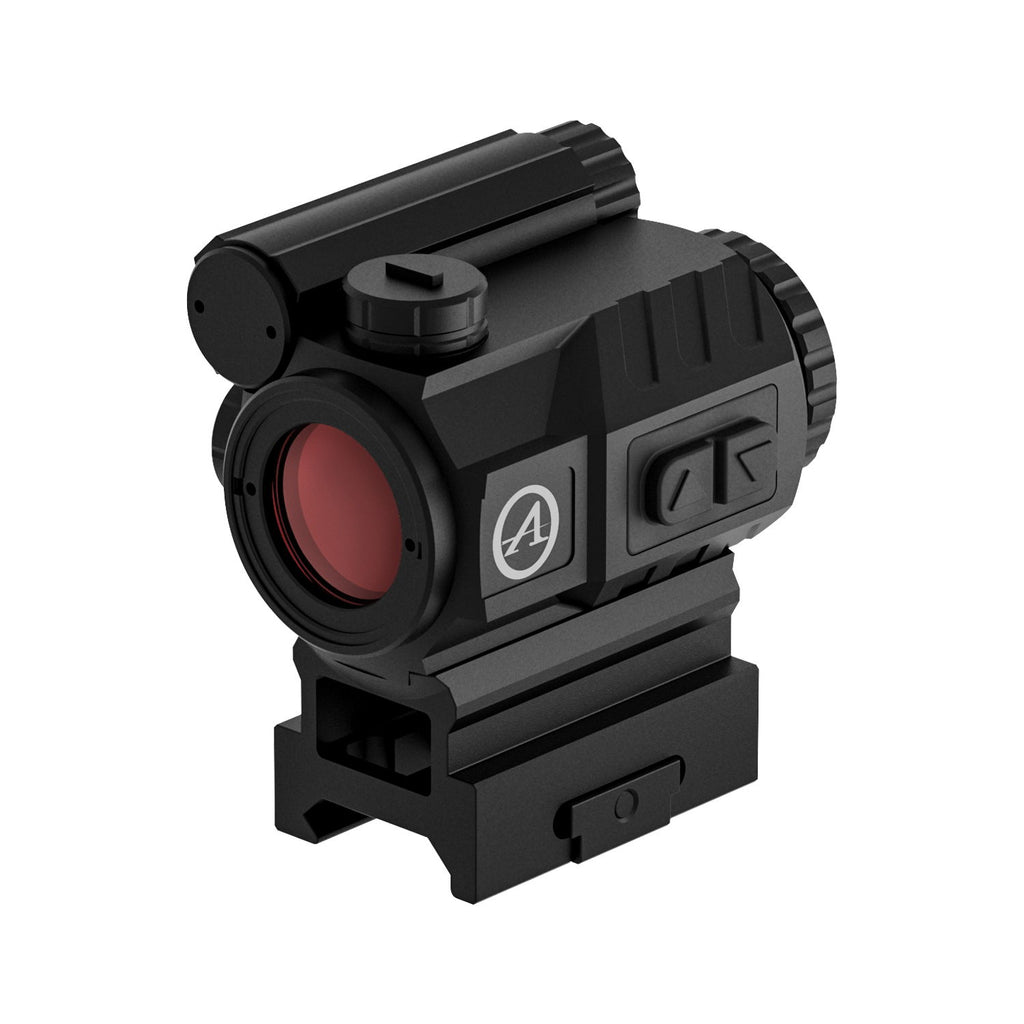
A prism scope is the answer to a question a lot of shooters do not know they are asking. If a red dot looks like a smear, a comma or a small starburst rather than a dot, the optic is not defective and neither is the mount. The reticle is a projected point of light, your eye has astigmatism, and no amount of brightness adjustment will fix it.
A prism scope solves that by etching the reticle into glass and magnifying it. Your eye focuses it the way it focuses a target, a fence post or anything else in the world, which means corrective lenses work on it. That is the core of the format, and everything else about a prism — the short body, the fixed magnification, the usable dead-battery reticle — follows from the same design.
What a prism scope actually is
The name describes the optical path. Instead of a series of relay lenses to turn the image right side up, a prism does the inverting in a single piece of glass. That collapses the length dramatically, which is why a prism at a given magnification is so much shorter than a conventional scope at the same power.
The reticle is etched onto a lens surface inside that path. Illumination, where it exists, lights the etching from the side rather than projecting anything, so the reticle exists whether or not the diode does.
The consequences are consistent across the category. Prisms are short and comparatively light. They have a fixed magnification, because there is no erector assembly to zoom. And they have a real eye box — a specific distance and position behind the optic where the full field of view appears — which is the price of admission and the thing most people underestimate.
Astigmatism is the reason most people buy one
It is worth being precise about this, because it is the one problem a prism solves that nothing else does as cleanly.
An astigmatic eye has an irregularly shaped cornea or lens, so a point source of light does not resolve to a point. A red dot, being a point source, gets smeared into whatever shape that particular eye produces. The dot is fine. The eye is doing something the dot cannot compensate for.
Because a prism's reticle is a physical object being magnified rather than a light source being projected, it resolves the way physical objects do. Glasses or contacts that correct your vision correct the reticle too. Shooters who have spent years assuming they simply could not shoot a red dot well often find the problem disappears entirely.
This is also why a prism is worth considering even at one power, where it offers no magnification advantage at all. You are not buying magnification. You are buying a reticle your eye can actually see.
Fixed magnification is a feature and a limit
There is no zoom ring, and that simplicity is part of the appeal. Nothing to set wrong, nothing to forget under time pressure, and a reticle whose subtensions are always correct because the magnification never changes.
The limit is obvious once you shoot one. At one power, a prism handles nearly like a red dot and gives up almost nothing except unlimited eye relief. At three power, you gain real target identification at distance and you lose speed up close — the eye box tightens, and a shooter moving fast will occasionally find a black field instead of a target. At five power the optic starts competing with a different category entirely, and that comparison usually goes against it, because a low-power variable optic at that magnification can also come back down to one.
So the honest framing is a range rather than a ranking. One power for astigmatism and close work. Three power as the general-purpose choice. Five power only if you specifically want a fixed setting and value the shorter body over the flexibility.
Prism, red dot, or LPVO
Three formats, three trade-offs, and the right answer depends more on your eyes and your distances than on the specifications.
A red dot wins on speed, weight and eye relief. You can shoot it from any head position, it has effectively no eye box, and the batteries last years. It loses if your astigmatism smears the dot, and it gives you no ability to identify anything at distance.
A prism wins on reticle clarity, compactness relative to its magnification, and having a reticle that survives a dead battery. It loses on eye box discipline and on flexibility, since you are committed to one magnification.
A variable wins on flexibility and nothing else, which is often enough. It is heavier, longer, and more expensive at comparable glass quality, and it asks you to manage a magnification setting. On a build where weight is the whole point, that matters — anyone assembling a lightweight AR-15 feels a variable's heft immediately, and a prism is frequently the better compromise.
And if the rifle is meant to reach genuine distance, none of these three is the answer. That job belongs to a proper long range scope with turrets you can dial.
The prism scopes worth buying
Grouped by the job, because magnification and price track each other loosely and the trade-offs do not.
Fixed 3x, etched ACSS Raptor reticle, autolive illumination
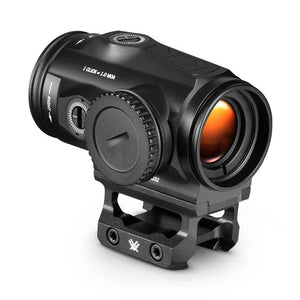
Fixed 3x, etched AR-BDC4 reticle, integrated mount
Fixed 1x, etched ACSS Cyclops reticle, red dot handling
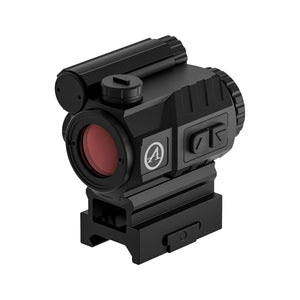
Fixed 1x, etched reticle, shake-awake illumination
Fixed 3x, etched reticle, shake-awake illumination
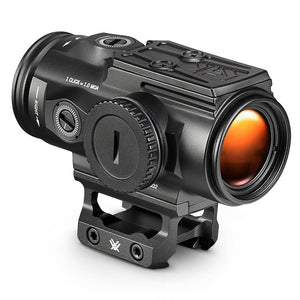
Fixed 5x, etched AR-BDC4 reticle, integrated mount
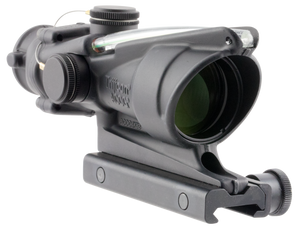
Fixed 4x, etched reticle, tritium and fiber optic illumination
What you give up
Eye box discipline is the real cost. A prism demands a repeatable head position, and the demand grows with magnification. This is not a defect to be engineered away; it is a consequence of the optical design. It does mean the stock length and mount height you chose for a red dot may not suit a prism, and fixing that is cheaper than replacing the optic.
Weight is the second cost. A prism is light for its magnification but heavy next to a micro red dot, and most models include an integrated mount that adds to the total. Compare the assembled weight rather than the optic alone.
Illumination quality is where budget models separate from premium ones. An etched reticle is always there, but a dim or coarsely stepped illumination setting limits how usable it is against dark backgrounds — which is precisely when you need it. If low light is part of the plan, pair the optic with a proper weapon light rather than expecting reticle illumination to do that work.
Battery behaviour is worth checking rather than assuming. Some models stay dormant until the rifle moves and wake instantly; others run continuously and need switching off. Neither approach is wrong, but a motion-activated optic left in a safe behaves very differently from one you expect to find already on, and the etched reticle makes it easy not to notice the illumination died weeks ago.
Mounting height and eye relief decide whether you like it
Most complaints about prism scopes are really complaints about installation.
Mount height has to put the optic where your head naturally sits when the rifle comes up. Too low and you crane down; too high and you lift off the stock. Either way you land outside the eye box, the field of view goes dark at the edges, and the optic gets blamed for a mounting error. Many prisms ship with a mount at a fixed height and offer alternates — choose deliberately rather than accepting the one in the box.
Eye relief then sets how far back the optic needs to sit. A prism has a narrower usable range than a red dot, so position it fore and aft on the rail with the rifle shouldered, not on a bench with your head in an artificial position.
Set the diopter if the model has one, focusing on the reticle against a blank background rather than against a target. A reticle that looks slightly soft is usually an unset diopter rather than poor glass, and it is a minute of work to rule out.
Zeroing is where the magnification pays you back
A magnified prism is easier to zero precisely than a red dot, and that is an underrated part of the appeal. A dot subtends a fixed angular size that covers a meaningful part of the target at distance, so a dot-sighted rifle can only be zeroed as finely as the dot allows. An etched reticle magnified three or four times gives you a much finer aiming reference and a visible centre, which tightens the zero itself.
Use the finest feature the reticle offers rather than the thick outer bars, and confirm the zero from a stable position with the rifle supported. Adjustments on compact prisms are often coarser than on a full-size scope, so count clicks deliberately and verify with a fresh group rather than assuming the turret did what you asked. Once it is set, most prisms hold zero well, because there is no erector assembly moving inside the tube — the same structural simplicity that makes them short makes them stable.
Frequently asked questions
What is a prism scope?
It is a compact optic that uses a glass prism rather than a set of relay lenses to invert the image, which is what lets it stay short. The reticle is etched into the glass instead of being projected as a dot, and the magnification is fixed rather than variable. Most sit between a red dot and a traditional riflescope in both size and capability.
Do prism scopes really help with astigmatism?
For most people with astigmatism, yes, and it is the single best reason to buy one. A red dot is a projected point of light, and an astigmatic eye smears that point into a comma or a starburst. A prism scope's reticle is physically etched into glass and then magnified, so your eye focuses it the same way it focuses anything else. If corrective lenses fix your vision, they fix the reticle too.
Does a prism scope work with a dead battery?
The reticle does, because it is etched rather than projected. You lose the illumination, which leaves a black reticle that is perfectly usable against a bright background and hard to see against a dark one. That is a meaningful advantage over a red dot, where a dead battery leaves you with an empty tube.
Prism scope or a red dot with a magnifier?
A magnifier setup is more flexible, because it swings out of the way and gives you a true unmagnified sight when you need one. A prism is lighter, shorter, and optically cleaner at the same magnification, and it does not require you to manage a second device under stress. If you already own a red dot and want occasional magnification, buy the magnifier. If you are building from scratch and want one fixed setting, buy the prism.
What magnification should I choose?
One power if the main problem you are solving is astigmatism and you want red-dot handling. Three power if you want to identify targets at distance and can accept a smaller eye box and slower close-range shooting. Five power starts to overlap with a low-power variable, at which point the variable is usually the better buy because it can also go back down to one.
Can you put a magnifier behind a prism scope?
It is possible with some combinations but rarely worth it. Stacking magnification compounds the eye box problem, adds length and weight behind the optic, and the result is dimmer than a purpose-built magnified scope. If you want more magnification than a prism gives you, change the optic rather than adding glass behind it.
Guns & Gear HQ earns a commission when you buy through links on this page. It costs you nothing and it is what pays for the price tracking behind these numbers. We pick products on the merits and quote whatever the retailers actually charge.
Comments