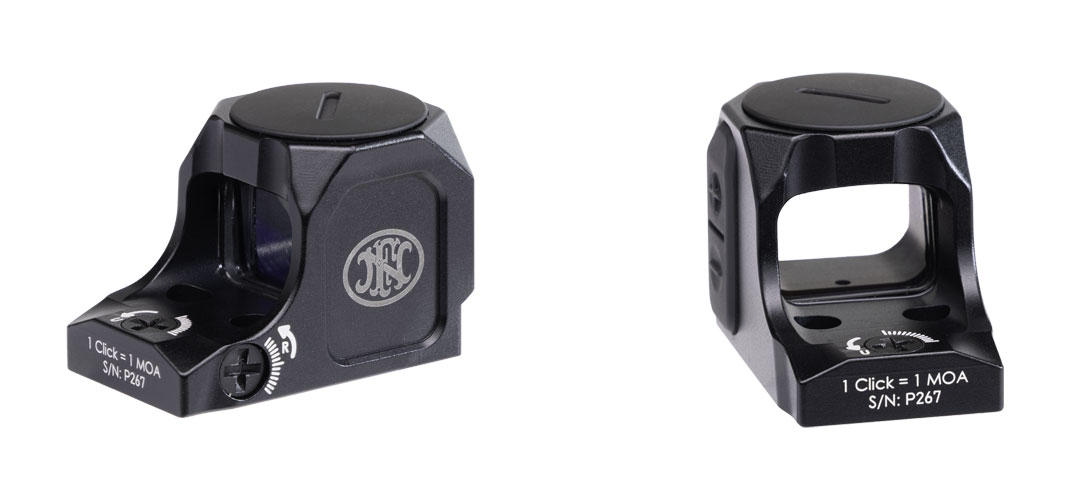
A pistol red dot is the rare upgrade that changes how fast you shoot rather than how the gun looks. It is also the upgrade most people buy twice — once on price, and again after the first one fogs in a waistband, dies in a drawer, or turns out not to fit the cut already milled into the slide. The distance between those two purchases is most of what there is to know about this category.
The failure modes decide the optic, not the feature list
Every pistol dot on the market puts a lit aiming point in a window. What separates them is what happens after that: a slide reciprocating against the optic thousands of times, a battery tray that has to seal, and an emitter that has to keep throwing light at the lens when the gun has been riding against a sweaty shirt since six in the morning.
Those are the three places pistol optics fail, and they are worth naming because they map directly onto what you should be willing to pay for. Housings crack at the screw bosses because a slide is a far more violent host than a rifle receiver. Batteries go flat in trays that are hard to reach without pulling the optic and losing zero. Emitters get occluded by lint, rain and carry debris until the dot dims or disappears entirely — and that last one is the failure people discover at the worst possible moment, because an open emitter washing out is silent until you need the dot.
Nothing on this page is immune to any of it. The picks below are sorted by which of those failures each design takes most seriously, and what it surrenders to do that.
Open emitter or enclosed emitter is the first real fork
An open-emitter sight aims a diode across an open channel at the back of the lens. It is lighter, sits lower over the bore, costs less, and has a wider useful window for the size. It is also an open channel, which means it can collect whatever the environment hands it.
An enclosed-emitter sight seals the light source behind glass. Rain, snow, lint and pocket debris cannot reach it. The price is height over the bore, a little more weight on the slide, and usually a larger bill — plus taller sights to co-witness, because the optic sits higher.
Neither is the correct answer in the abstract. A gun that lives in a case and comes out on a range day is not fighting lint, and the open emitter is the better buy. A gun carried inside the waistband every single day, or worked outdoors in weather, is exactly the case enclosed optics were built for. Decide which gun you are actually equipping before you decide which optic is better.
Your slide cut picks the optic before you do
The footprint on your slide narrows the field faster than any specification argument. Full-size and compact optics-ready pistols are usually cut for the RMR pattern or something close enough to share it. Subcompact and micro-compact slides are typically cut for the smaller RMSc-style pattern, and a dot built for the wider footprint simply will not sit on them. Enclosed sights using the Acro pattern are their own thing again, with a rail interface rather than a pair of posts.
Adapter plates exist to bridge those gaps, and they work, but the trade is real: a plate raises the optic, adds a second set of fasteners to the recoil path, and is the single most common reason a dot will not hold zero. If you are still choosing the pistol, buying one cut for the footprint you want is worth more than any feature on the optic itself.
One more thing worth checking before you spend: whether a dot is the right optic at all. If an emitter-based dot smears into a comma or a starburst when you look at it, that is astigmatism, and no amount of brand-switching fixes it. An etched reticle does, which is the entire argument for prism optics and worth reading before you buy a third red dot hoping the next one looks round.
A bigger dot is faster to find and harder to shoot precisely with
Dot size is the specification people argue about most and understand least. A larger dot is easier to pick up on presentation, more forgiving when your index is imperfect, and more visible against a cluttered background. It also covers more of the target the further out you shoot, which is exactly where a precise shot needs the aiming point to be small.
The practical resolution is to pick for the job. A gun whose realistic use is close and fast benefits from a larger dot, and the small loss in mechanical precision is theoretical at the distances involved. A gun used for deliberate shooting at distance, or for competition where a partial target is the scoring problem, wants the finer dot. Several of the picks below sidestep the argument with a multi-reticle emitter offering a dot alone or a dot inside a circle, and the circle turns out to be a useful compromise: the ring is what your eye catches on presentation, and the dot is what you refine with.
Window size follows the same logic and gets less attention than it should. A larger window does not make the optic more accurate, but it makes finding the dot easier while you are still learning, and that is worth real money in the first six months of shooting one.
Brightness and battery discipline matter more than the spec sheet
The most common complaint about a working pistol optic is a dot that looks like a starburst, and the most common cause is having the brightness set far higher than the light requires. A dot cranked to daylight settings indoors will bloom for almost anyone, and will look genuinely broken to a shooter with astigmatism. Turn it down until the dot is the dimmest it can be while still being instantly visible. Auto-brightness models handle this without input, which is a convenience on a carry gun and a mild annoyance on a range gun where you may want manual control.
Battery handling divides the field in a way worth checking before you buy. Some designs take a battery from the top without removing the optic, which means a battery change never disturbs your zero. Others require pulling the sight off the slide, and on those the correct habit is to change the battery on a schedule you will remember and reconfirm zero afterward. Neither approach is wrong, but one of them costs you a trip to the range every time, and that is worth knowing in advance rather than discovering it.
The picks
Each box below pulls current offers from multiple retailers at the moment the page loads, so what you see is what the optic costs today rather than what it cost when this was written.
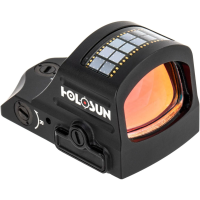
Open emitter, RMR footprint, solar backup, multi-reticle
Open emitter, RMR footprint, forged housing built around the recoil path
Fully enclosed emitter, Acro footprint, sealed housing
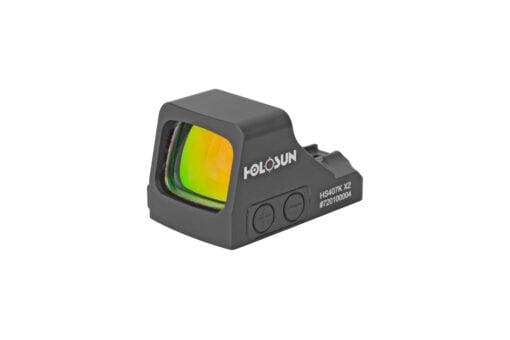
Open emitter, K-pattern footprint, single dot reticle
Open emitter, RMSc-pattern footprint, top-load battery
Open emitter, RMSc-pattern footprint, shake-to-wake
Open emitter, DeltaPoint Pro footprint, aluminum shroud over the emitter
What a pistol dot does not fix
A red dot makes the aiming reference easier to see and easier to shoot with both eyes open. It does not stabilize the gun, and it does not shorten the trigger press. The common disappointment after mounting one is a first shot that feels slower, not faster, because finding the dot on presentation is a learned skill and the front sight was not. That resolves with dry practice against a consistent index. It does not resolve by buying a better optic.
It also does not extend the pistol's useful range as much as people expect. A dot makes a precise shot easier to call, but the mechanical accuracy of the gun and the shooter's stability are unchanged. If the goal is genuinely more capability at distance, that is a rifle problem, and the optic conversation there runs through magnified optics rather than a reflex sight.
Two practical notes that come up constantly. If you plan to run a can on the gun, you want sights tall enough to clear it and an optic mounted to work with them — the same suppressor-height sight logic covered in our 9mm suppressor guide applies to the optic height, not just the irons. And if this is a carry gun rather than a range gun, the optic is the cheap part of that decision; carry laws, reciprocity and the consequences of using the gun vary enormously by state. Verify your own jurisdiction's rules rather than trusting a summary, and understand what carry insurance does and does not cover before you need it.
How to mount one so it stays mounted
Most zero-loss complaints are installation problems wearing an optic's name. Degrease the screws and the slide cut. Use the fasteners that came with the optic or the plate, not the ones in the parts drawer, because thread engagement depth is not a place to improvise. Apply a medium-strength thread locker, torque to the manufacturer's published figure with a driver that can actually measure it, and let the locker cure before shooting.
Then confirm zero, and confirm it again after roughly a hundred rounds. Screws settle. A dot that walks in the first range session and then never moves again is the normal outcome, not a defect — but you only find out which one you have by checking.
Frequently asked questions
Do I need suppressor-height sights with a pistol red dot?
You do not need them for the optic to work, but most shooters want them. Standard-height irons usually sit below the glass and disappear from the window, which leaves you with no backup if the dot fails and nothing to index with while you learn to find it. Suppressor-height sights sit tall enough to co-witness inside the window. They are also what lets the same gun run irons if you pull the optic off.
Is an enclosed emitter worth the extra height and weight?
It depends on where the gun lives. An enclosed emitter seals the light source behind glass so lint, rain, snow and carry debris cannot settle in the emitter channel and wash the dot out. That is a real benefit on a gun carried inside the waistband every day or worked outdoors. It costs you height over bore, a little weight, and usually more money, and a range gun that lives in a case rarely needs it.
Will a red dot work if I have astigmatism?
Sometimes, and the only honest test is looking through one. Astigmatism smears an emitter-based dot into a comma or starburst for a lot of shooters, and turning the brightness down often helps more than switching brands. A larger dot can be easier to live with than a fine one. If every red dot looks like a smear, an etched reticle is the fix rather than a different dot, which is why prism optics exist.
Can I mount a pistol red dot without a factory slide cut?
Yes, through an adapter plate or a milled slide, and both have trade-offs. A plate raises the optic, adds a second set of screws to the recoil path, and is the most common source of a dot that will not hold zero. Milling is permanent and puts the optic as low as the design allows. A factory optics-ready slide cut to the footprint you want is the cleanest option.
How long does a pistol red dot battery actually last?
Manufacturers publish runtimes in the tens of thousands of hours for most modern pistol dots at moderate brightness, which for a carry gun is a change every year or two rather than something to track. Brightness setting matters more than the number on the box, and features like shake-to-wake trade a little standby draw for a dot that is already on when the gun clears the holster. Change it on a date you remember and confirm zero afterward.
Guns & Gear HQ earns a commission when you buy through links on this page. It costs you nothing and it is what pays for the price tracking behind these numbers. We pick products on the merits and quote whatever the retailers actually charge.

Comments