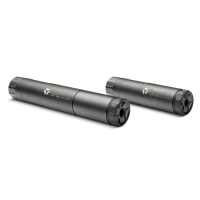
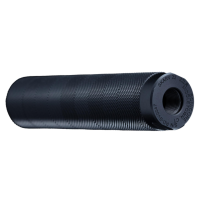
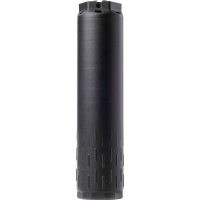
Two coordinated interim final rules published in the Federal Register on July 23, 2026, will move most suppressors off the United States Munitions List and onto the Commerce Control List beginning November 20 — the most consequential regulatory change to American suppressor commerce in decades and a development the suppressor industry had pursued for more than ten years.
The State Department's Directorate of Defense Trade Controls and the Commerce Department's Bureau of Industry and Security jointly published the rules, which take effect 120 days after publication. Under the new framework, suppressors designed for use with non-automatic and semi-automatic firearms will transfer from USML Category I to the Commerce Control List under Export Control Classification Numbers 0A501.f and 0A502.f. Suppressors designed for fully-automatic hosts remain on the Munitions List and continue to require State Department licensing.
The practical effect is a shift from ITAR to the Export Administration Regulations for most commercial-grade suppressors. ITAR licensing has historically made suppressor exports economically impractical: the per-license fees, turnaround times, and compliance overhead meant that even large manufacturers with established international distribution for their firearm lines found it difficult to profitably export cans. The National Shooting Sports Foundation, the firearms industry trade group, has argued for years that ITAR effectively barred American suppressor companies from competing in markets — particularly in Europe and Oceania, where hunting with suppressors is common and legal — where they would otherwise have a natural commercial presence.
Knox Williams, president and executive director of the American Suppressor Association, called the change "a major step towards allowing American hunters to travel with their suppressors and American businesses to compete in thriving, well-established international commercial markets." The ASA, which has lobbied for suppressor export reform since at least 2016 when the Suppressor Export Act was first introduced in Congress, framed the rules as long-overdue recognition that the products compete in a global civilian sporting market, not a military one.
Commerce's Bureau of Industry and Security estimated in the rulemaking record that the change will generate approximately 200 additional export license applications per year under the EAR framework — a number that reflects how suppressed the market has been, given that American manufacturers hold a significant domestic market share and produce products competitive in price and quality with European makers. Under the EAR, export licensing for civilian-use items to allied countries tends to be faster and cheaper than ITAR licensing for the same end use.
The regulatory gap that prompted reform was geographic and cultural: countries including Finland, Norway, Sweden, New Zealand, and the United Kingdom allow suppressor ownership with minimal restriction for hunting and recreational shooting, while their sporting shooters faced a largely European supplier base because American products were priced out by compliance costs. SilencerCo, Rugged Suppressors, Dead Air Silencers, and other U.S. manufacturers had long cited the ITAR barrier as the primary reason their international distribution lagged their domestic penetration.
The November 20 effective date gives exporters roughly four months to prepare EAR compliance procedures, establish or update export licensing relationships with freight forwarders, and review end-user documentation requirements under the new classification numbers. Industry legal advisers have noted that companies previously operating under ITAR will need to evaluate whether transitioning to EAR licensing makes sense for their specific product lines and markets, since the two frameworks impose different record-keeping and re-export obligations.

Comments