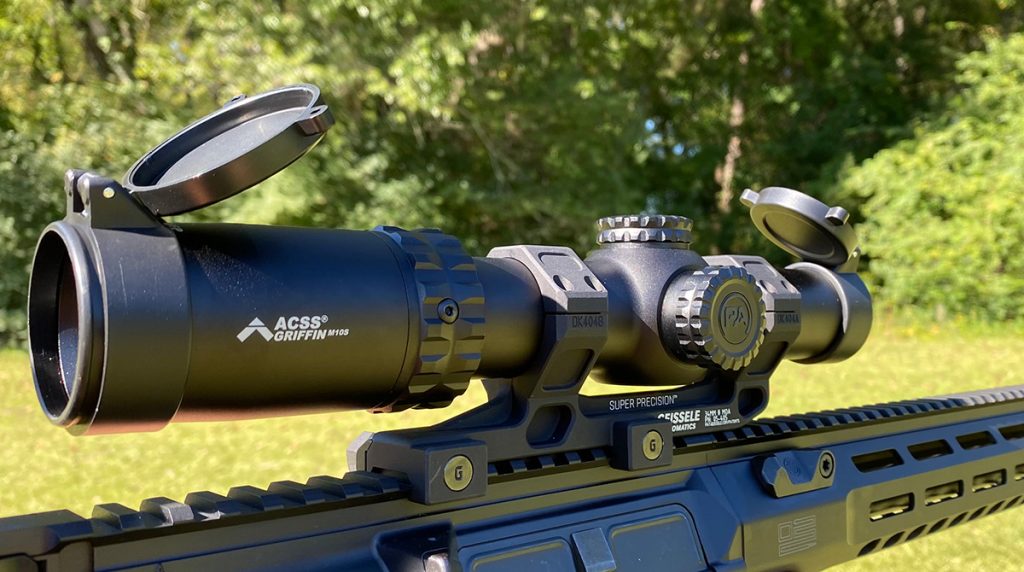
An LPVO is the most useful optic you can put on a carbine, and the easiest one in the shop to overpay for. A 1-6x that costs a couple of hundred dollars and a 1-6x that costs two thousand are the same shape, the same length, and photograph identically on a white background. The specification sheets read almost the same. The money goes somewhere you cannot see in a product listing.
That makes this a category where knowing the actual spread matters more than in most.
What the LPVO market actually costs right now
The block above is drawn from every low-power variable optic we currently track, across two dozen retailers, and the shape of it is the story. The distance between where this category starts and where it tops out is more than twentyfold. No other optic category we follow stretches that far.
That spread is not manufacturers being greedy at the top. It reflects a genuine engineering range, from a simple second-focal-plane tube with a battery-powered dot to a first-focal-plane scope with a tracked elevation turret and glass that stays usable in the last twenty minutes of light. The problem for a buyer is that the listing photograph and the headline specification — 1-6x24, 30mm tube, illuminated reticle — are identical at both ends.
Note also how far the average sits above the median in that block. That is a category with a long tail of expensive optics pulling the mean upward, which tells you most of what is actually on shelves lives well below the average price. If you have been anchoring on a number you saw on a premium scope, you are anchoring high.
Why the entry price is not the cheapest listing anywhere
The entry figure in that block is the third-cheapest listing we can see rather than the single lowest, and this category shows why that convention earns its keep.
The bottom of our LPVO catalog is dominated by one direct-to-consumer house brand that sells through its own storefront. That is legitimate inventory and those are real prices, but a single seller setting the floor for a category this large is a thin basis for a market claim. Layered on top of that, retailers list open-box and cosmetically blemished stock alongside new inventory, and a price feed cannot reliably tell the difference. Taking the third listing up rather than the first gives a number that is not hostage to one seller or one discounted return.
The practical advice follows from that. If a listing is materially cheaper than the entry price in that block, find out why before you celebrate. Check whether it is open box, whether it is a blemished unit, and whether the reticle and focal plane are the configuration you actually wanted, because manufacturers sell the same model number in several.
The three specifications that separate these optics
Magnification range is the one buyers fixate on and it is not the most important.
The first thing that actually separates an LPVO is whether the illumination is genuinely daylight-bright. At 1x the optic is competing directly with a red dot, and a red dot wins on speed unless the illuminated centre is bright enough to catch the eye instantly in full sun. Manufacturers publish this as a daylight-bright specification; whether it delivers is the most consistent difference between price tiers in this category.
The second is the eyebox — how much latitude you have in head position before the image goes dark. It is not a number on a box, which is why it is easy to sell past. A generous eyebox at the top of the magnification range is expensive to engineer, and it is the difference between an optic you can mount and shoot and one that punishes an imperfect cheek weld. Eyeboxes get tighter as maximum magnification rises, which is the hidden cost of buying a 1-10x over a 1-6x.
The third is the mount, and it is not included. An LPVO needs to sit forward on an AR-pattern receiver for correct eye relief, which means a one-piece cantilever mount, bought separately, and a bad one will lose zero no matter how good the scope above it is. Budget for it at the same time. A rifle built to be light deserves particular attention here, since mount and scope together often outweigh the handguard — our guide to a lightweight AR-15 build covers where that weight actually accumulates.
Tube diameter is worth a line of its own, because it is quietly load-bearing. Most of this category uses a 30mm tube, some of the longer-range designs use 34mm, and the number matters for two reasons that have nothing to do with brightness. It dictates which rings and mounts fit, so it constrains a purchase you are making separately, and a larger tube generally allows more internal elevation travel. It does not, on its own, make an optic brighter — that is the objective lens and the coatings — despite how often it gets sold that way.
| Product | Retailer | Price | |
|---|---|---|---|
| Beast 1-6x24 Second Focal Plane LPVO Series | Monstrum | $159.99 | Check price |
| AT3 Tactical Red Tail 1-4x24mm LPVO Rifle Scope 30mm Tube Second Focal Plane | Optics Planet | $175.49 | Check price |
| Firefield RapidStrike Rifle Scope 1-6x 24mm Illuminated Circle Dot Reticle Matte Black | MidwayUSA | $179.97 | Check price |
| XTS Destination Zero 1-6x 24mm LPVO Rifle Scope 30mm Black | Optics Planet | $189.99 | Check price |
| Primary Arms Classic Series Rifle Scope 1-6x 24mm Illuminated Duplex Reticle Matte Black | MidwayUSA | $199.99 | Check price |
| LH-6 1-6x24 SFP LPVO | Illum. KLBOX | 30mm Tube | Optics Force | $199.99 | Check price |
| BLEMISHED Burris RT-6 Rifle Scope - 1-6x-24mm Illuminated Ballistic AR Reticle Matte Black | Natchez Shooting & Outdoors | $206.99 | Check price |
| Sig Sauer Tango MSR Rifle Scope 30mm Tube 1-6x 24mm Illuminated Hellfire FL-6 Reticle Matt | MidwayUSA | $224.99 | Check price |
Live retailer pricing, refreshed daily. We may earn a commission on purchases made through these links.
The optics worth mounting
1-8x second focal plane, 30mm tube, illuminated BDC reticle
1-6x second focal plane with the ACSS ranging and holdover reticle
1-6x with an illuminated Hellfire reticle on a 30mm tube
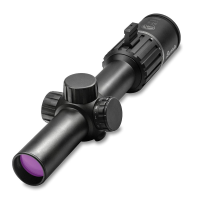
1-6x second focal plane with an illuminated ballistic AR reticle
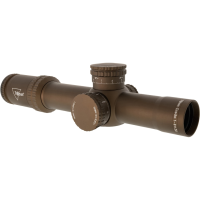
1-8x first focal plane, 28mm objective, segmented circle reticle
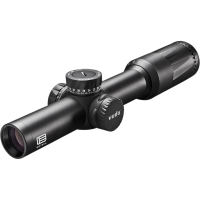
1-6x first focal plane with the SR-series speed ring reticle
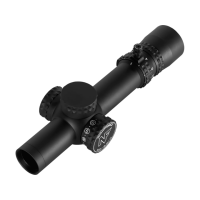
1-8x first focal plane with ZeroStop and a capped elevation turret
First focal plane or second focal plane?
This is the specification most likely to leave a buyer with the wrong optic, because both answers are correct for different shooters.
In a first focal plane scope the reticle scales with magnification. Holdover and ranging marks are therefore accurate at every power setting, which is what you want if you actually use them. The cost is at the bottom of the range: at 1x that reticle has shrunk to something very small, and the optic then lives or dies on how bright its illuminated centre is. A first focal plane scope with weak illumination is a poor red dot substitute.
Second focal plane keeps the reticle a fixed apparent size regardless of magnification. That generally produces a better, bolder aiming point at 1x, which is where most carbine shooting happens. The trade-off is that the subtensions are only truthful at one magnification, usually the maximum, so holdovers taken at 4x on a 1-8x scope are simply wrong.
The honest rule of thumb: if the rifle is primarily a close-range gun that occasionally reaches out, second focal plane with strong illumination serves you better. If you are genuinely using the reticle to range and hold at distance, first focal plane is worth the compromise at 1x.
1-6x, 1-8x or 1-10x?
More magnification is not free, and the cost is paid at the end of the range you use most.
A 1-6x is the lightest, shortest and cheapest way into the category, and it has the most forgiving eyebox of the three. For a carbine working inside a few hundred yards it gives up very little that matters.
A 1-8x buys meaningful reach for identifying and hitting at distance, and it is now the most common configuration in the category. It is heavier, usually longer, and the eyebox at the top end asks more of your head position.
A 1-10x pushes further still and charges for it in all the same currencies, plus more. At the budget end of the market a 1-10x is often the worst value in the category, because delivering a usable image at 10x is expensive and a cheap scope spends its money elsewhere. If the choice is between a good 1-6x and a poor 1-10x at the same price, take the 1-6x.
Consider the host as well. On a short-barrelled rifle the extra magnification is largely wasted against what the barrel can do, and the length of a larger scope is working against the reason you built the rifle short in the first place — our guide to short barrel rifles covers what that configuration is and is not good at.
What else the rifle needs
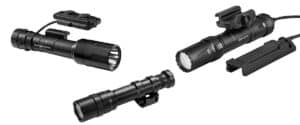
An LPVO at 1x is fast, but it is not a substitute for being able to see. A magnified optic gathers light better than the naked eye in dusk conditions and not at all in the dark, which is why a weapon light belongs on the same rifle rather than as an afterthought.
Two smaller notes worth budgeting for. An offset red dot, mounted at 45 degrees, solves the close-range problem that even a good 1x leaves open, and it is a common addition once a shooter has lived with an LPVO for a season. And a set of scope caps is cheap insurance for glass that represents a large share of what the rifle cost.
Zeroing deserves more care than it usually gets on this kind of optic. Set the zero at the magnification you expect to shoot at most, then confirm it at both ends of the range, because a scope that prints true at 1x and wanders at maximum power is telling you something about the erector assembly that no specification sheet will. Check the mount screws again after the first hundred rounds, and record the torque you used so you can tell a loose screw from a shifting scope later. Most LPVO complaints that get blamed on the glass turn out to be the mount underneath it.
Frequently asked questions
What does LPVO actually stand for?
Low power variable optic. In practice it means a riflescope whose bottom end is 1x, or close enough to it that both eyes stay open, and whose top end is somewhere between 4x and 10x. The defining feature is that true 1x setting, which is what lets the same optic work like a red dot up close and a magnified scope at distance.
Is first focal plane or second focal plane better on an LPVO?
They solve different problems. In a first focal plane scope the reticle grows with magnification, so holdover marks stay accurate at any power — useful if you actually range and hold. The cost is a reticle that can be nearly invisible at 1x unless the illumination is strong. Second focal plane keeps the reticle a constant size, which usually gives a better 1x daylight dot, but the subtensions are only correct at one magnification.
How much magnification do I actually need?
For most carbine use inside a few hundred yards, 1-6x is enough and is the lightest and cheapest way to get there. The 1-8x and 1-10x designs buy reach for identification and precision at distance, and charge for it in weight, tube length and eyebox discipline. More magnification narrows the eyebox, and a narrow eyebox costs you speed at 1x, which is where most shooting happens.
Do I need a cantilever mount, and is it included?
Almost always yes, and usually no. An LPVO needs to sit forward far enough for correct eye relief on an AR-pattern receiver, which is what a cantilever one-piece mount does. Most scopes in this category are sold as a bare tube. Budget for the mount as a separate line item, because a good scope in a mount that will not hold zero is a wasted purchase.
Why is the illumination so important on an LPVO?
Because at 1x the optic is competing with a red dot, and a red dot wins on speed unless the LPVO's illuminated centre is bright enough to be picked up instantly in daylight. Manufacturers describe this as daylight-bright illumination. It is the single specification that most separates scopes that look similar on paper, and it tends to track price closely.
Is a cheap LPVO worth buying?
It depends on what you are asking of it. The entry end of this category will hold zero and give you usable magnification, which is genuinely more than nothing. What it will not reliably give you is daylight-bright illumination, a forgiving eyebox at the top of the range, or glass that stays clear in poor light. If the rifle is a range toy, that may be an acceptable trade. If it is a rifle you depend on, it is not.
Guns & Gear HQ earns a commission when you buy through links on this page. It costs you nothing and it is what pays for the price tracking behind these numbers. We pick products on the merits and quote whatever the retailers actually charge.
Comments