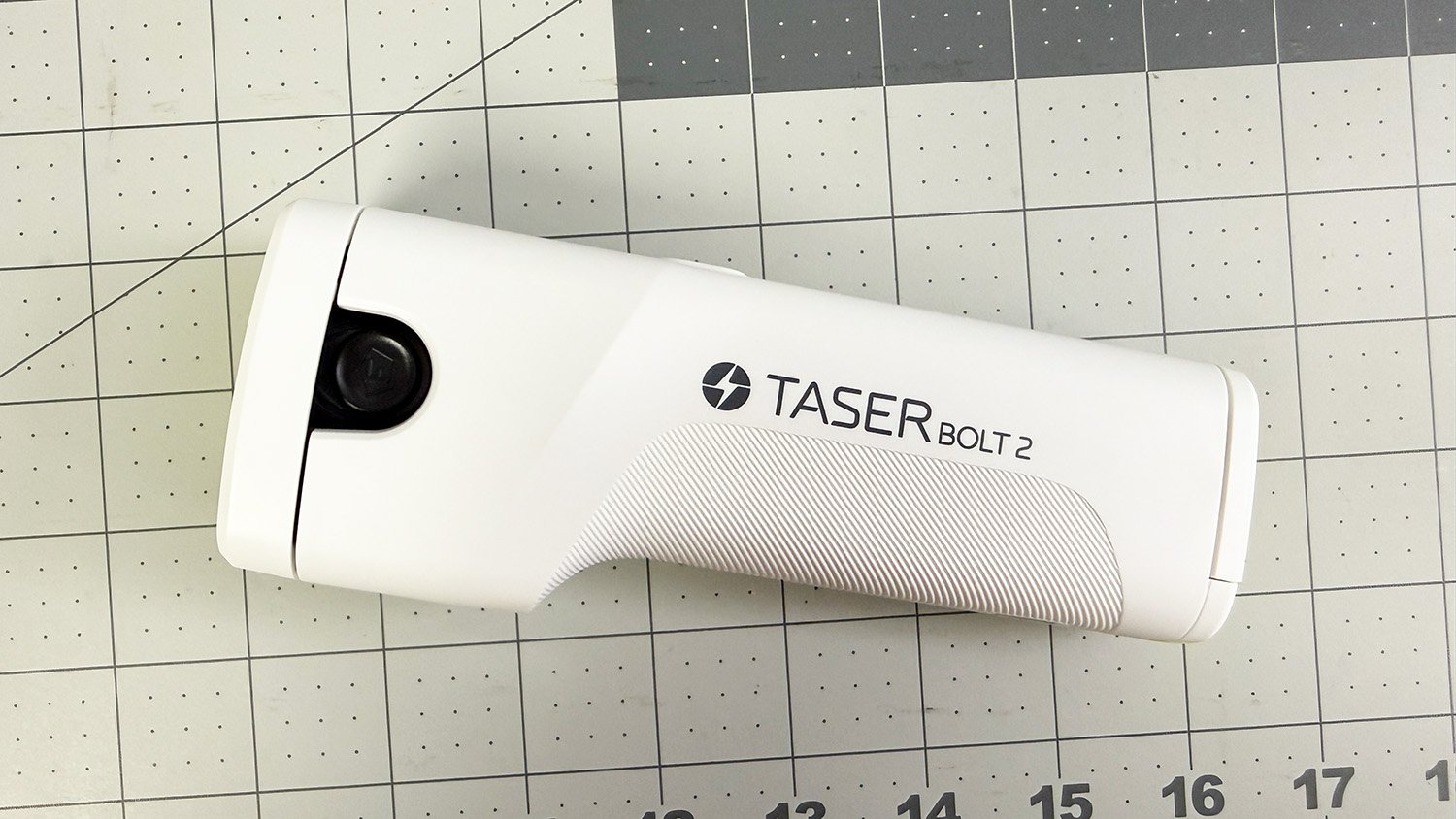
The Second Amendment Foundation and the Firearms Policy Coalition filed a petition for a writ of certiorari at the Supreme Court on July 7, asking the justices to take up Calce v. City of New York and strike down New York City's categorical ban on civilian possession of stun guns and tasers. The Second Amendment Foundation announced the filing the same day, calling the case "essentially Caetano 2.0."
New York City prohibits any civilian from possessing an electronic weapon — stun gun, taser, or similar device — under its administrative code, with no exception for private residence possession, self-defense use, or any other lawful purpose. The SAF and FPC filed the original suit in federal court in New York alongside five named residents of the city. The district court granted summary judgment to the city in March 2025, and the Second Circuit affirmed in a brief, unpublished order on April 13, 2026. Both courts held that the plaintiffs bore the burden of proving stun guns are in "common use" before the Second Amendment's plain text even applies to the ban — a threshold requirement that, in practical effect, required gun owners to prove their rights existed before they could assert them.
The petitioners' lead attorneys at Cooper & Kirk — David Thompson, Peter Patterson, and William Bergstrom — open the brief by pointing to Caetano v. Massachusetts, the Supreme Court's 2016 per curiam decision that summarily vacated a Massachusetts ruling denying Second Amendment protection to a woman who carried a stun gun for self-defense against an abusive former partner. In Caetano, the Court rejected the idea that an arm must have been in common use at the time of the founding to receive constitutional protection. The petition argues the Second Circuit has effectively rerun the same error the Court already corrected, this time demanding a "common use" showing as a threshold matter rather than engaging the constitutional text on its own terms.
According to Bearing Arms, stun guns and tasers are legal for civilian possession in 49 states and owned by hundreds of thousands of Americans, including domestic violence survivors and individuals who choose a less-lethal alternative to a firearm for home defense. The SAF described New York City as "one of the only jurisdictions in the country, and possibly the last," still enforcing a categorical civilian ban on nonlethal electronic weapons. The Firearms Policy Coalition separately filed a brief calling the Second Circuit's analysis a departure from Bruen — the 2022 Supreme Court landmark that required firearms regulations to be grounded in the historical tradition of regulation — and asking the Court to make clear that Bruen's framework applies to all arms bans, not just those involving firearms.
The filing lands three weeks after the Supreme Court's 9-0 ruling in United States v. Hemani, in which the justices struck down the federal firearm prohibition for habitual marijuana users under the Second Amendment. The Hemani ruling reinforced the Court's signal that it will not tolerate lower courts applying watered-down versions of the Bruen standard, and the SAF brief cites it directly as additional grounds for granting certiorari.
The Court could announce whether it will take the case as early as its first conference of the new term, scheduled for September. If cert is granted, the case would likely be argued in the October 2026 term alongside the assault weapons ban challenges the justices agreed to hear earlier this year — a lineup that would make the 2026 term the most consequential in Second Amendment jurisprudence since Bruen itself.



Comments