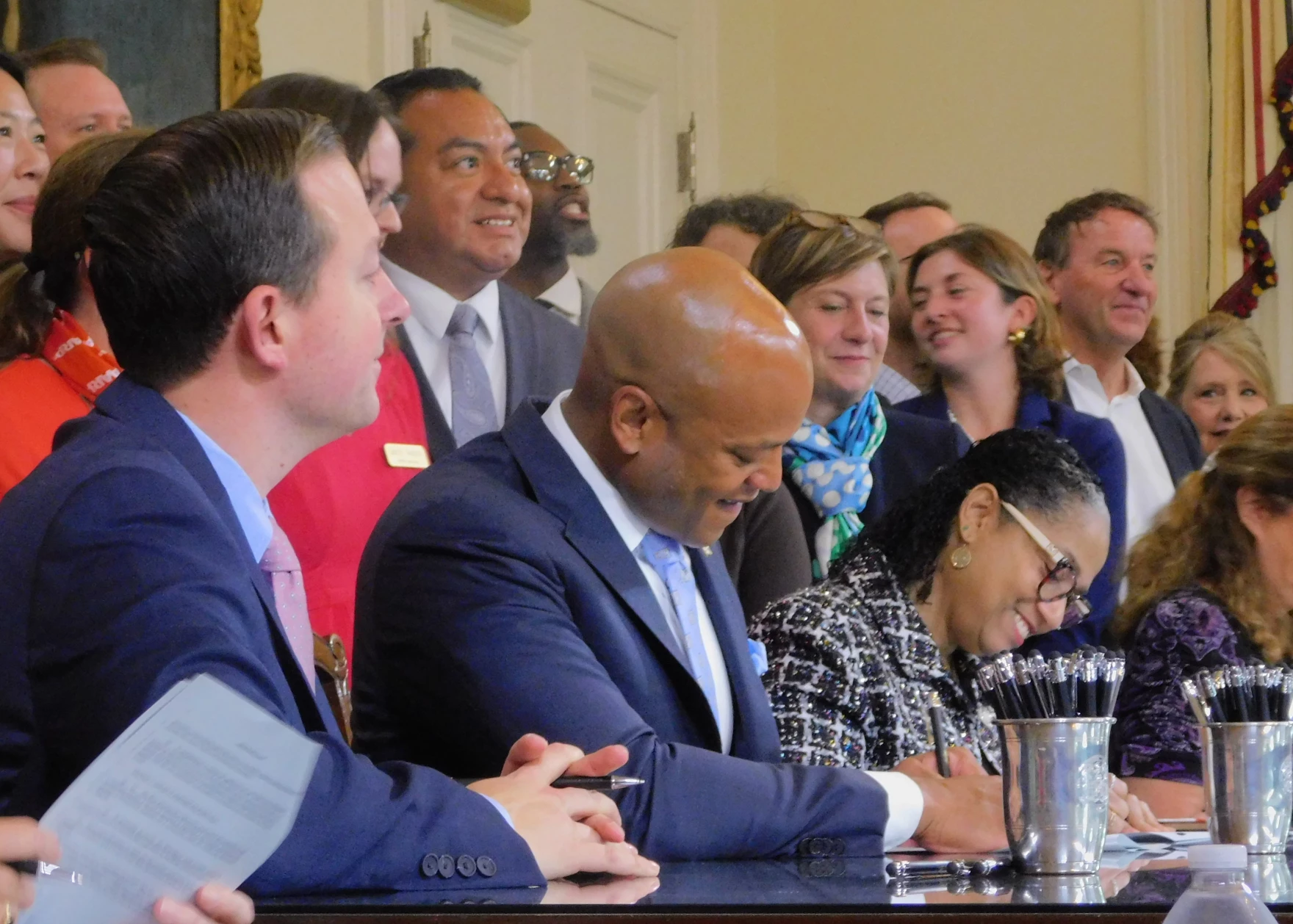
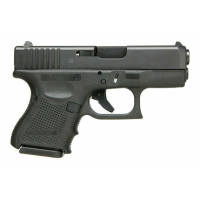
Maryland Governor Wes Moore signed Senate Bill 334 into law on May 26, making Maryland one of a small number of states to prohibit the manufacture, sale, transfer, and purchase of what the statute calls machine gun convertible pistols — a legal category defined by the presence of a cruciform trigger bar that encompasses Glock and Glock-pattern handguns. Within hours, the National Rifle Association, Second Amendment Foundation, and Firearms Policy Coalition filed a federal challenge in the U.S. District Court for the District of Maryland. The case is captioned NRA v. Moore and names Governor Moore, Maryland Attorney General Anthony G. Brown, and Michael A. Jackson, the acting superintendent of the Maryland State Police, as defendants.
AmmoLand News was among the first to report the filing, which was made on the day of signing rather than after the law's January 1, 2027 effective date. The decision to sue immediately rather than wait reflects the plaintiffs' view that the statute is unconstitutional on its face and that retailers and manufacturers should not have to spend months operating under legal uncertainty before a court weighs in.
The NRA, SAF, and FPC are represented by attorneys Nicole J. Moss, David H. Thompson, Peter A. Patterson, and William V. Bergstrom of Cooper & Kirk in Washington, D.C. The complaint argues that Glock and Glock-pattern semiautomatic pistols are among the most commonly owned handguns in the United States, placing them squarely within the category of arms the Supreme Court held to be constitutionally protected in District of Columbia v. Heller. The Bruen standard, which requires gun restrictions to have historical analogues from the founding era, gives the plaintiffs a second line of attack: there is no founding-era tradition of banning specific mechanical features of common handguns.
The practical stakes of the law are wider than a typical handgun restriction. SB 334's reach extends beyond retail sales to cover transfers and manufacture, meaning private transactions and estate dispositions are also prohibited. That scope would affect a large portion of the Maryland handgun market, since Glock-pattern pistols are consistently among the best-selling semiautomatic handguns in the country and hold significant law enforcement and civilian carry market share in the state.
Connecticut passed similar convertible-pistol legislation earlier this year, and courts will likely be asked to weigh the Maryland and Connecticut statutes in parallel cases. The outcomes on the common-use argument across the circuits will matter going forward, since any conflict between federal appeals courts on the constitutionality of Glock-pattern bans is likely to draw Supreme Court attention.
No preliminary injunction motion has been filed in NRA v. Moore as of press time. With the law's effective date set for January 1, 2027, the case is expected to develop over the next several months before any injunction becomes time-sensitive.

Comments