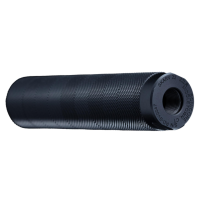
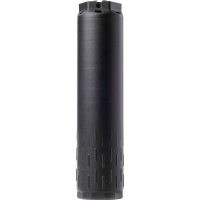
The Ninth Circuit Court of Appeals ruled on June 3 that suppressors fall outside the plain text of the Second Amendment — a published, circuit-wide precedent drawn from a criminal case featuring about the worst possible defendant.
United States v. DeBorba (No. 24-3304) arose from federal charges against João Ricardo DeBorba, who was present in the United States unlawfully, had falsely claimed U.S. citizenship on federally required firearms-transfer paperwork, was subject to active domestic-violence no-contact orders, and was found with an unregistered suppressor among other firearms and ammunition. The three-judge panel upheld his convictions in full, but in doing so it issued a published opinion establishing binding Ninth Circuit precedent: suppressors are accessories, not arms, and the Second Amendment does not cover them because they are not necessary to the ordinary operation of a firearm.
AmmoLand reports that Second Amendment advocates immediately characterized the ruling as a textbook example of a bad-facts case producing bad law. The concern is not that DeBorba himself deserved a different outcome — the facts on every other count are damning — but that a broad published holding now gives lower courts and state governments across the Ninth Circuit's nine-state jurisdiction a blueprint for restricting or banning suppressors without engaging in the historical-tradition analysis the Supreme Court mandated in Bruen. If the government never has to prove that suppressor restrictions are rooted in the nation's historical tradition of firearms regulation, it gains a shortcut that bypasses constitutional scrutiny entirely.
The timing makes the ruling especially consequential. Pending before the same court is Sanchez v. Bonta, a direct challenge to California's statewide suppressor ban with a far cleaner factual record. Sanchez had already been fully argued when DeBorba landed, meaning any ruling in that case must now contend with the new precedent. News2a reports that Second Amendment legal analysts believe DeBorba, precisely because it arose from unusually bad facts, may accelerate Supreme Court interest in the suppressor question by providing a clean illustration of how bad-facts criminal cases generate overbroad constitutional doctrine.
Separately, three district-court challenges to the NFA's registration regime are approaching critical junctures. In Brown v. ATF — filed in the Eastern District of Missouri and backed by the NRA, Second Amendment Foundation, Firearms Policy Coalition, and American Suppressor Association — Chief Judge Stephen Clark has scheduled oral argument on cross-motions for summary judgment for June 18. The plaintiffs argue that after Congress eliminated the NFA transfer tax for suppressors, short-barreled rifles, and short-barreled shotguns in this year's One Big Beautiful Bill Act, the registration regime can no longer be justified under Congress's taxing power. A companion challenge, Jensen v. ATF, is pending in the Northern District of Texas. In both cases the Justice Department has defended NFA registration under the Commerce Clause and argued that suppressors can be regulated because they are particularly dangerous and uniquely susceptible to criminal misuse — essentially the same rationale the DeBorba panel relied upon.
The June 18 summary judgment argument before Judge Clark is the next major milestone in the NFA challenge track. Whether those district courts treat the Ninth Circuit's categorical suppressor exclusion as persuasive authority or as a circuit-split in the making will shape the trajectory of cases that appear headed toward a Supreme Court increasingly attentive to how lower courts treat Second Amendment rights.
Comments