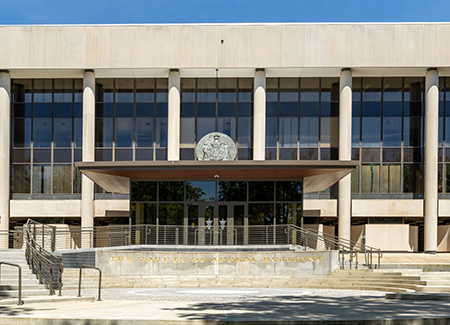
The Appellate Court of Maryland upheld the state's ban on firearms possession by adults between 18 and 20 years old on Monday, ruling that age-based firearm restrictions have sufficient historical backing to survive constitutional scrutiny. The unanimous three-judge panel, writing in an appeal stemming from the 2019 arrest of Terrell Henry Fields — who was 20 at the time of the incident in Prince George's County — rejected arguments that Maryland's permitting scheme was unconstitutional as applied to that age group. Bearing Arms and the Daily Record both reported on the ruling.
Judge Kathryn Graeff wrote the opinion, concluding that "the burden that [the law] imposes on the Second Amendment right of 18-to-20-year-olds is consistent with the nation's historical tradition of firearm regulation." Judges Rosalyn Tang and Senior Judge Donald Beachley, who was specially assigned to the panel, concurred. The ruling applies the Supreme Court's 2022 Bruen framework, which requires courts to root firearm regulations in the nation's historical tradition rather than rely on the interest-balancing tests Bruen swept aside.
The Maryland panel found that tradition in founding-era and colonial statutes that subjected younger men to age-based restrictions on arms and militia participation. Second Amendment advocates have consistently contested that reading, arguing that the historical record does not support a categorical exclusion of adults — people who are eligible to vote, sign contracts, and serve in the military — from the core protections of the Second Amendment. Several federal courts have agreed with that critique and struck down similar restrictions at the district court level, creating the kind of circuit-level disagreement that typically precedes Supreme Court review.
The Firearms Policy Coalition, Second Amendment Foundation, and other litigation groups have been pressing the adult-under-21 question across multiple jurisdictions. FPC has secured favorable district court rulings challenging federal restrictions on handgun sales to 18-to-20-year-olds, though federal appellate review of those wins remains pending. The Fourth Circuit Court of Appeals, which covers Maryland and has historically been among the less receptive circuits for Second Amendment claims, is likely to see the question eventually — either through a direct appeal of the Fields case or through one of the parallel federal proceedings already in the pipeline.
Maryland's posture is notable in context. The Maryland Supreme Court earlier this year voided Montgomery County's blanket carry restriction as exceeding local authority, demonstrating some judicial appetite for limiting government overreach on gun issues at the state level. The intermediate appellate court's ruling in Fields takes a different approach at the state level, upholding a categorical age restriction that applies statewide. Advocates are expected to evaluate whether to pursue the Fields case at the Maryland Supreme Court, where the framing around young adults' enumerated rights could find a more receptive audience than it did in the appellate panel.
The practical effect for 18-to-20-year-olds in Maryland is that the possession restriction remains in force pending any further review. The question of whether that restriction is constitutionally sustainable — for adults in every other legal sense — remains unsettled at the federal appellate level and is likely to reach the Supreme Court as courts across the country continue to divide on the issue.





Comments