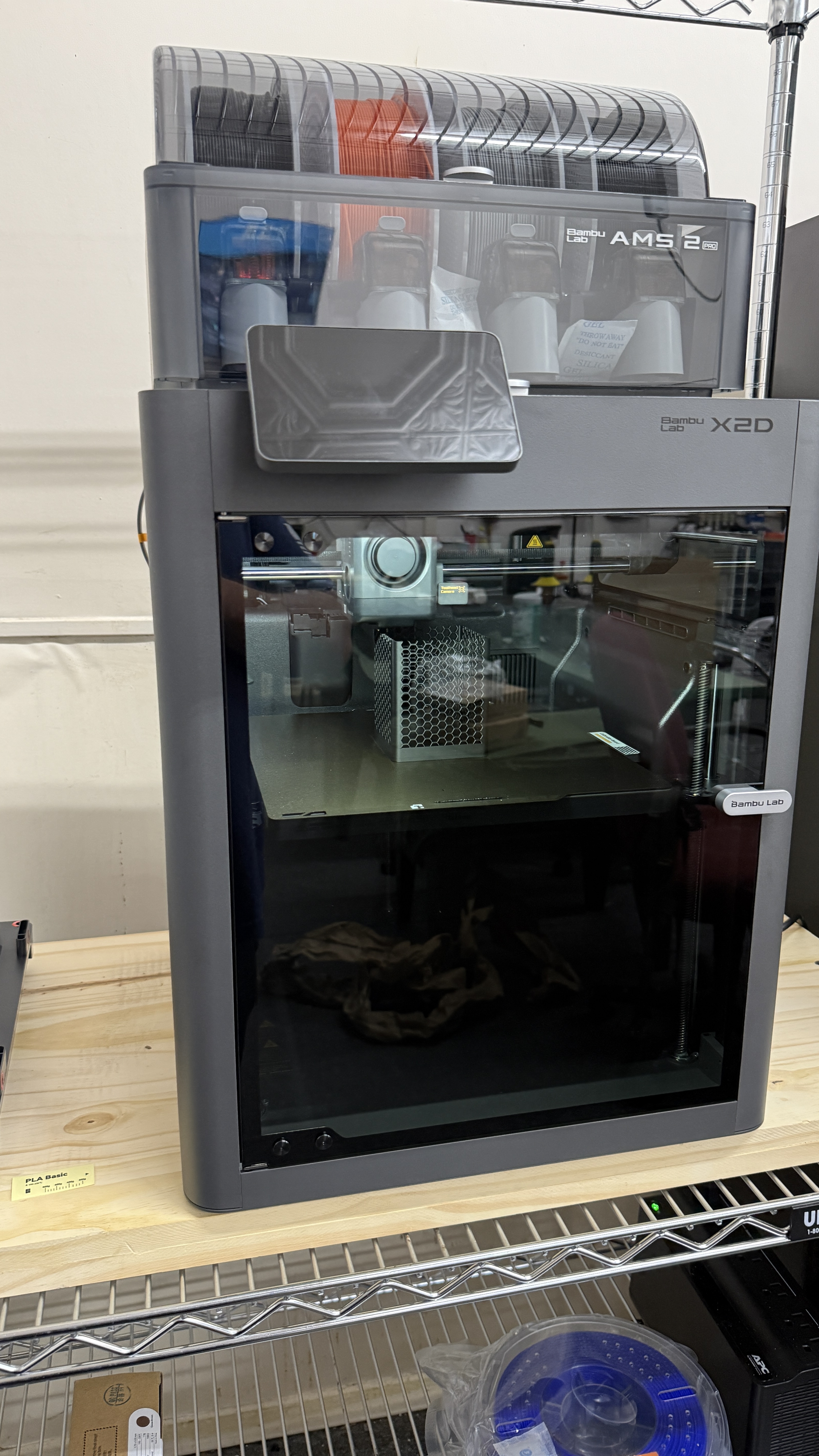
California's Senate Judiciary Committee scheduled a hearing for June 23 on Assembly Bill 2047, a bill that would prohibit the sale or transfer of any three-dimensional printer in the state unless it carries software designed to detect and block the printing of known firearm designs. The bill, introduced by Assemblymember Rebecca Bauer-Kahan and backed by Everytown for Gun Safety, passed the full California Assembly on May 27 and advanced to the Senate after being amended on May 18.
AB 2047, formally titled the California Firearm Printing Prevention Act, would require the state Department of Justice to maintain a roster of certified 3D printer manufacturers whose products include approved "firearm blueprint detection algorithms." Only printers on the DOJ roster could be sold or transferred in California. Starting March 1, 2029, knowingly disabling, deactivating, uninstalling, or circumventing the mandated blocking software would become a criminal offense — a provision the NRA-ILA says would apply not only to manufacturers but to any owner who modifies or replaces their printer's firmware.
The NRA-ILA has called AB 2047 a censorship mandate, arguing the bill raises serious First Amendment concerns alongside Second Amendment implications. The Electronic Frontier Foundation reached a similar conclusion, describing the legislation as requiring general-purpose computing hardware to carry surveillance software as a condition of sale — a framework the EFF compared to the anticompetitive cartridge lock-in schemes used by inkjet printer manufacturers. The NRA-ILA reported in June that the bill's "censorware" requirement would concentrate enormous power in the California DOJ, effectively allowing the state to determine which 3D printer manufacturers can operate in the nation's most populous state.
Gun-rights advocates note that California already separately prohibits the manufacture of untraceable firearms under state law. AB 2047 targets the tool rather than the individual act of manufacturing, a distinction critics say makes the bill constitutionally vulnerable. The Supreme Court's 2022 Bruen decision requires firearms regulations to be grounded in historical tradition from the founding era — and no founding-era analog exists for requiring a manufacturing tool to carry government-approved screening software.
The bill cleared the Assembly Public Safety Committee on a 6-0 vote, the Assembly Judiciary Committee 9-3, and the full Assembly with amendments before heading to the Senate. A companion bill moving through Senate committees, AB 1743, would separately expand access to California's Automated Firearms System by increasing law enforcement data-sharing on registered firearms.
If AB 2047 clears Senate Judiciary and the Senate Appropriations Committee, it would proceed to a Senate floor vote before the legislature adjourns in mid-September. Governor Gavin Newsom has signed every major gun-control measure that reached his desk in recent sessions. Legal challenges from gun-rights organizations including the NRA, SAF, and FPC are anticipated if the bill becomes law, given its unprecedented reach into general-purpose consumer hardware with no historical parallel in firearms regulation.





Comments