The Supreme Court's November 9 orders list denied certiorari in 22 firearms-related cases, 16 of them directly challenging the federal felon-in-possession prohibition under 18 U.S.C. § 922(g)(1), AmmoLand reported. The denials leave each lower-court judgment intact but establish nothing on the merits — a cert denial does not constitute a ruling that the challenged law is constitutional, and the question of 922(g)(1)'s post-Bruen validity remains open.
The sixteen petitions targeting § 922(g)(1) pressed arguments that a categorical, lifetime ban on firearm possession by all convicted felons — applied regardless of offense severity or time since conviction — cannot survive the historical analogical analysis required under the Heller-Bruen framework. Circuit courts have divided on the question. Some circuits apply 922(g)(1) broadly to all felony convictions, while others have recognized that the Bruen test may require carving out exceptions for non-violent or minor felony offenses that have no historical analog in the Founding era's disarmament tradition. A Congressional Research Service report titled "Circuit Split on Constitutionality of Federal Felon-in-Possession Prohibition Persists After Supreme Court Denies Review" confirmed that Monday's cert denials leave that division among the circuits fully intact, with no controlling guidance from the high court.
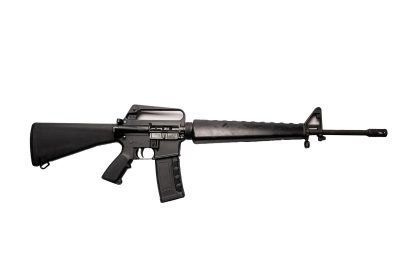
GunStuff TV reported that the same November 9 orders list granted the Solicitor General permission to participate in oral argument in the consolidated state assault weapons ban cases, now scheduled for December 2. The grant signals active federal-government engagement in the high-stakes challenge to state-level AR-15 and similar rifle restrictions, and Second Amendment advocates are treating the December sitting as the most significant firearms argument before the Court since Bruen in 2022. The Court's willingness to hear those cases stands in contrast to its continued refusal to take up the felon-ban petitions — a pattern that gun-rights litigants are watching carefully.
The November 9 conference was part of a heavier-than-usual gun-law docket. An earlier October 5 conference also declined cert in a separate batch of firearms petitions covering felon-ban and reciprocity challenges. As of this writing, a Maryland carry-restrictions petition is listed for the Court's November 13 conference, with a ruling expected in Monday's orders.
Gun rights litigants have so far used repeated cert denials as motivation to continue building the lower-court record — an approach that widens the volume of post-Bruen 922(g)(1) decisions across the circuits and raises the probability the Court will eventually need to intervene. With the December AR-15 arguments now on the calendar and multiple additional cert petitions in the pipeline, the 2026-27 term is shaping up as the most consequential firearms term at One First Street since Bruen itself.

Comments