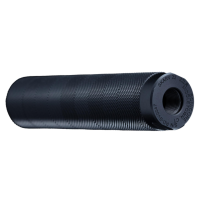
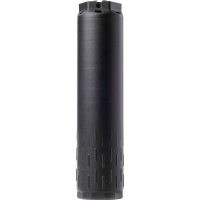
The Justice Department filed a First Amended Complaint on May 14 expanding its ongoing lawsuit against the District of Columbia to add a constitutional challenge to the city's outright suppressor prohibition, AmmoLand News reported. The amended complaint, filed in U.S. District Court for the District of Columbia, names the Metropolitan Police Department and Acting Police Chief Jeffrey Carroll as defendants alongside the city government, and asks the court to declare both the existing semi-automatic rifle ban and the suppressor ban unconstitutional and unenforceable.
The original suit, filed in January 2026 under 34 U.S.C. § 12601 — a federal civil-rights statute permitting the Attorney General to seek relief against government entities whose law enforcement officers engage in a pattern or practice of constitutional violations — had challenged D.C.'s prohibition on AR-15-style rifles and other semi-automatic firearms. The amended complaint adds D.C. Code § 22-4514(a), which the District describes as covering "appliance[s] for causing the firing of any firearm to be silent or intended to lessen or muffle the noise of the firing of any firearms."
Applying the Bruen two-step framework, DOJ argues that suppressors qualify as bearable arms that "facilitate armed self-defense" and therefore fall within the presumptive protection of the Second Amendment. The complaint contends that suppressors are in common use among law-abiding Americans — for hearing protection, safer training, and home defense — and that the District cannot rebut the presumption of unconstitutionality because there is no analogous historical tradition of banning an instrument in common use. That argument has become more salient over the past year as Congress eliminated the $200 NFA transfer tax on suppressors and Form 4 applications surged, broadening the ownership base and, with it, the pool of lawful owners directly affected by D.C.'s ban.
The amendment follows a pattern established in DOJ's other Second Amendment suits. Earlier filings targeted Denver's AR-15 and magazine bans and Colorado's statewide magazine restriction, pressing federal courts to apply post-Bruen protections broadly across both semi-automatic rifles and NFA-regulated accessories. Adding suppressors to the D.C. complaint marks a meaningful expansion of that strategy — the first time DOJ has formally argued in federal court that a suppressor ban is unconstitutional as applied to otherwise lawful owners. A favorable ruling at the trial or appellate level would carry significant weight in other jurisdictions where suppressor restrictions remain on the books.
D.C. has not yet filed a formal response to the amended complaint. A scheduling conference is expected in the coming weeks, after which briefing deadlines will be set. Any district-court ruling may be appealed to the D.C. Circuit, which has not yet issued a definitive post-Bruen opinion on suppressor regulations specifically. The circuit's eventual treatment of the suppressor question will influence pending cases in other courts and could set the table for a future Supreme Court petition.
Comments