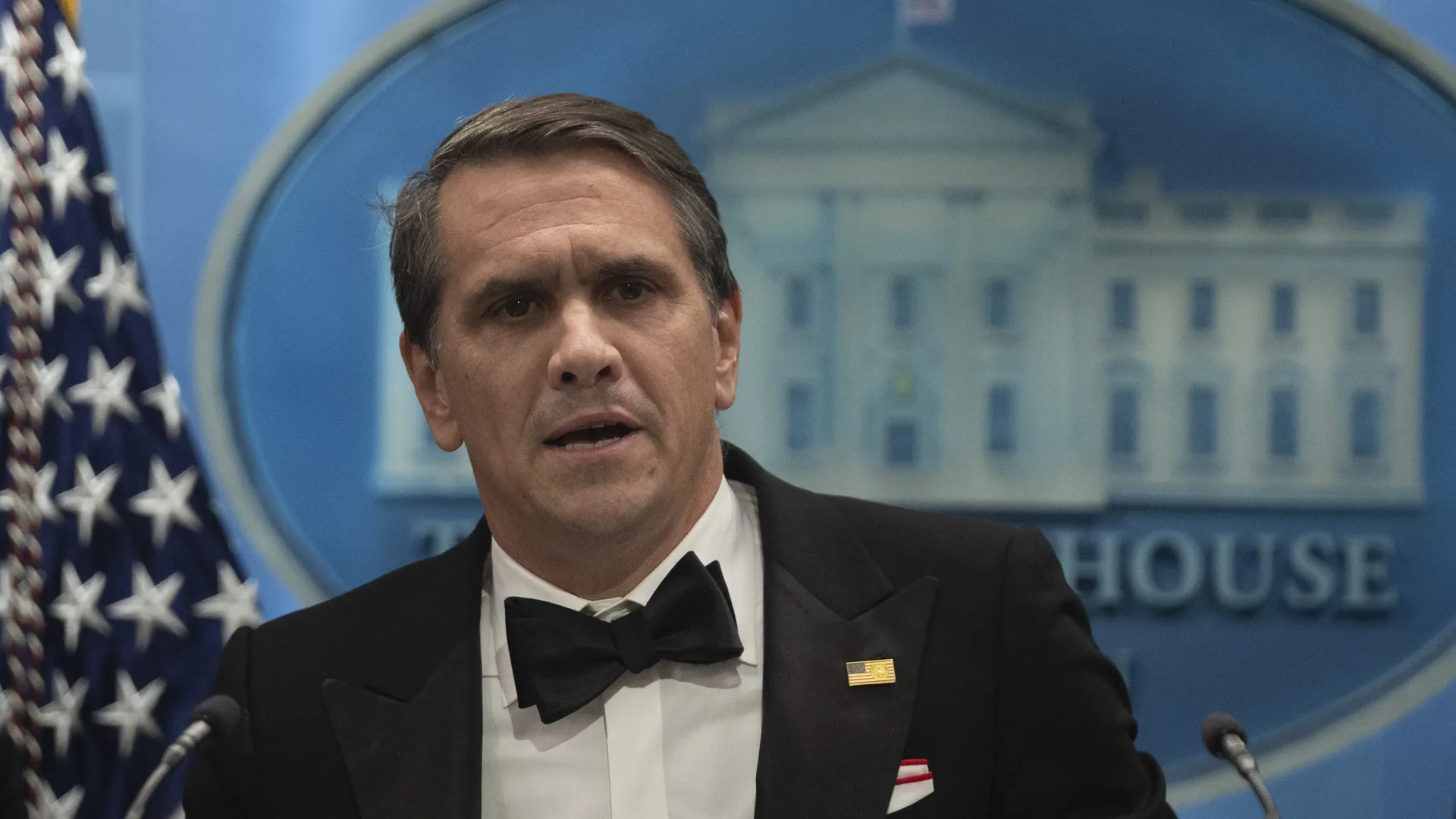
Acting Attorney General Todd Blanche rejected calls for new firearms restrictions Sunday after federal prosecutors charged a California man with attempting to assassinate the President during the White House Correspondents' Dinner. AmmoLand was among the first to point out the obvious irony: the attack unfolded in Washington, D.C., which maintains some of the strictest gun statutes in the nation.
Cole Tomas Allen, 31, of Torrance, California, allegedly ran through a security magnetometer at the Washington Hilton on April 25 while carrying a long gun, according to the Department of Justice press release filed April 27. A Secret Service officer was shot in the chest and survived; officers subdued Allen before he reached the ballroom where President Trump, Vice President Vance, and Cabinet members were seated. Allen faces three federal counts: attempting to assassinate the President, using a firearm during a crime of violence, and transporting a firearm in interstate commerce with intent to commit a felony. All three charges exist under current law.
Appearing on CBS's Face the Nation on Sunday, Blanche made the DOJ's position clear. "This isn't about changing the law and making the laws more restrictive around possession of firearms," he said. "I don't think the narrative here is about changing laws or making our laws more restrictive." Axios reported the full exchange, which came after several media personalities and Democratic officials called for congressional action in the hours following the incident. As Bearing Arms noted, the commentators could not identify which specific restriction would have changed the outcome given that D.C. already requires registration of long guns and prohibits carry for most residents.
Blanche's response fits a broader posture he outlined at the 155th NRA Annual Meetings in Houston earlier this month, where he described an imminent package of regulatory changes at the DOJ and ATF that would treat the Second Amendment as a "first-class right." According to YourNews, Blanche told the Houston audience those changes would be "more expansive, more durable, and more aggressively defended in court than anything seen from a presidential administration in modern history." He also confirmed the ATF's previous zero-tolerance posture toward FFL dealers has ended. That regulatory package is expected to be published in the coming weeks.
Watch for the formal rulemaking filings and any new federal charges in the Allen case, which is proceeding in U.S. District Court for the District of Columbia.





Comments